


Hearing Aids & Value
Since a federal category for OTC devices opened up, adults who feel they have mild to moderate hearing difficulty can buy a set without seeing a professional first. That access is genuinely useful. It also means the choice now sits with you, and the smart comparison is not price against price but price against what each path includes.
Below we lay out the myths that trip people up and what tends to be true instead. If you would rather talk it through in person, our San Mateo and San Carlos team is glad to help you sort out which route fits your hearing and your budget.
Myth: they're the same device at two prices
The hardware can look similar, but the two categories serve different needs. OTC aids are designed to be self-selected and self-adjusted by adults who judge their own loss to be mild or moderate. Prescription aids are chosen and programmed to your specific hearing profile, usually after a hearing evaluation, and can be tuned for more significant or unusual patterns of loss. So the fairer way to think about it is not cheap versus expensive, but do-it-yourself versus professionally fitted. Which one earns its price depends on how complex your hearing is and how much guidance you want.
Myth: the cheaper option is automatically the better value
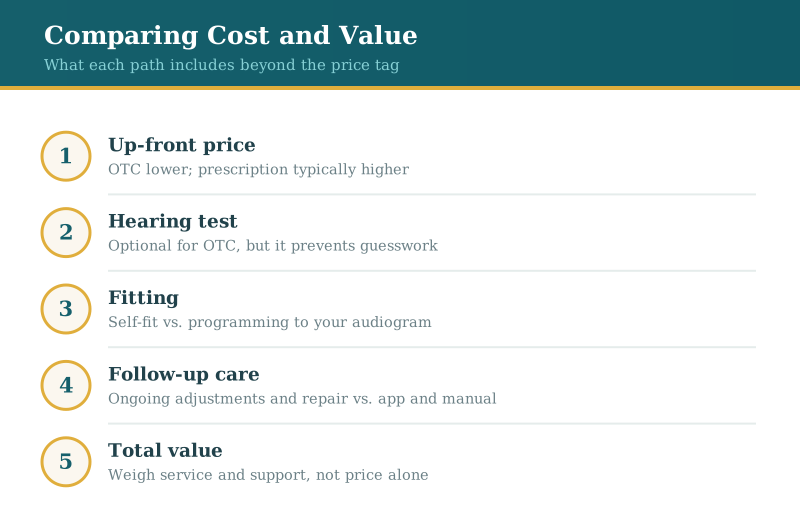
OTC devices generally cost less up front, often a few hundred to around a thousand dollars a pair, while prescription aids typically run higher. But value is what you get for the money, not the money alone. A prescription price usually folds in the exam, a custom hearing aid fitting, adjustments, and a stretch of follow-up. With most OTC purchases, that professional time is not included. If a self-fit device works well for you, the lower price is real savings. If it sits in a drawer because it never sounded right, the cheaper option turned out to cost more.
Myth: buying OTC means you can skip the hearing test
You can legally buy OTC aids without one, but skipping the test skips the information. OTC devices are meant only for adults with perceived mild to moderate loss, a limit ASHA spells out in its guide to the different kinds of hearing aids, and self-perception is an imperfect gauge. A test tells you how much loss you have, in which pitches, and whether anything else is going on, such as one ear differing from the other or a medical issue behind the change. Even if you still choose an OTC device afterward, you will select and adjust it with facts rather than guesswork.
Myth: prescription aids are overpriced for what the hardware costs
Judge a prescription set by the plastic and chips alone and the price looks steep. The number reflects a service relationship, not just a gadget. You are paying for professional selection across brands, programming matched to your ears, real-ear verification in many clinics, and someone to call when something changes. That bundle is why two devices with similar specs can carry very different prices and very different experiences. Whether the added service is worth it depends on you: some people thrive on self-adjustment, while others get far more from their aids with a clinician tuning them.
Myth: once you buy, you're on your own either way
Aftercare is where the two paths often diverge most. OTC support usually means an app, a manual, and a return window. Prescription care is ongoing: your provider re-tunes the fit as you adapt, handles hearing aid repair and maintenance, and adjusts settings as your hearing shifts over the years. Hearing aids are not a one-time purchase so much as a device you live with daily, and small tune-ups make a large difference in whether you keep wearing them. Factor the years of support, not just the first transaction, into any honest comparison.
Myth: prescription care always means paying the top price
Assuming the highest number is the only number keeps some people from asking. In practice there is a wide range of technology levels and prices, and the right fit is often not the most expensive one. Some insurance plans and benefits offset part of the cost, and many clinics offer trial periods so you can confirm a device helps before you commit. Even if OTC turns out to be your best starting point, a short conversation about ranges and options usually costs nothing and saves you from guessing at the value blind. Latest: Samsung's Galaxy Buds are getting an FDA-cleared hearing aid feature, and our page explains what it can and cannot do.
Frequently asked questions
A few questions worth asking
Are OTC hearing aids worth trying first?
For many adults with mild, straightforward hearing difficulty, they can be a reasonable starting point, and the lower up-front cost is appealing. The catch is that you take on the selection and tuning yourself. A hearing test beforehand tells you whether your loss actually falls in the range OTC devices are built for, which is the single best way to avoid wasting money on the wrong tool.
Why do prescription hearing aids cost more?
Most of the difference is service, not hardware. The price generally covers the evaluation, professional programming to your specific loss, verification, and ongoing adjustments and support. When you look at what is bundled in, the gap narrows, and for people who benefit from expert tuning it often pays for itself in devices they actually wear.
Can I switch from OTC to prescription later?
Yes, and plenty of people do. Some start with an OTC device, find it isn't enough as their needs grow or their loss changes, and move to a fitted set. Nothing is lost by trying the simpler route first, as long as you keep an eye on whether it is truly meeting your needs rather than just sitting in a drawer.
How do I decide which is right for me?
Start with a clear picture of your hearing, then match it to how much guidance you want and what your budget allows. Our team can test your hearing, explain where you fall on the mild-to-severe range, and walk through both OTC and prescription options without pressure, so the decision rests on facts about your ears rather than a guess.