


Hearing Aid Care
Sometimes, though, replacing really is the smarter money. Devices that are several years old, that need fixing again and again, or that no longer match your hearing can cost more in patching than they return in benefit. In those cases a look at current hearing aids makes sense, not because newer is always better, but because the math and your ears both point that way.
This piece lays out the factors that tip the decision one way or the other, so you can weigh them calmly instead of guessing. When you would rather have a professional settle it, you can bring the devices to our San Mateo or San Carlos office and we will tell you honestly what we would do in your shoes.
At a glance
- Many hearing aids that seem broken only need cleaning, a fresh wax guard, or a replacement receiver.
- Age counts: after several years, parts and software support for older models start to run out.
- If your hearing itself has shifted, a new fitting or newer devices may help more than a repair.
- Repair price, remaining warranty, and the features you want all weigh into the choice.
Start by naming the problem
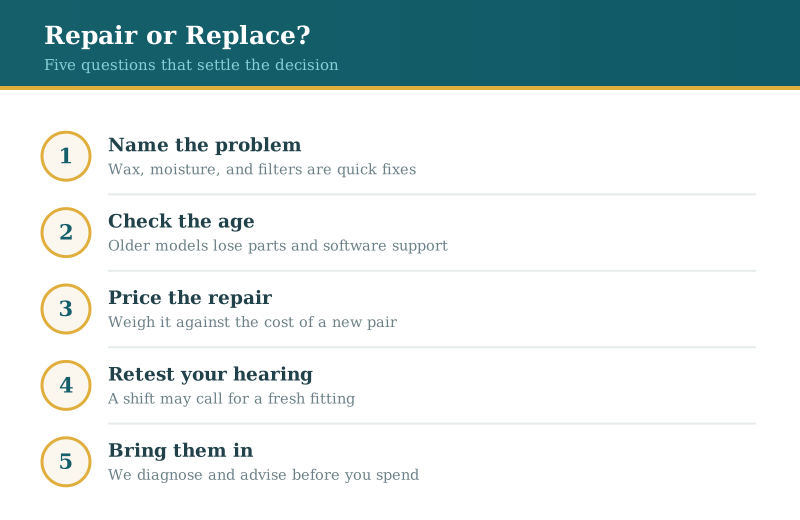
Before repair or replace even comes up, it helps to pin down what is actually wrong. A device that has gone silent is often a story about a drained battery, a clogged wax guard, or moisture that crept in overnight, none of which spells the end of anything. Sound that has turned muffled or scratchy frequently traces back to a filter or a tired receiver. Cutting in and out points to a loose connection or debris. Many of these are quick in-office fixes, so it pays to have someone diagnose the fault before you price a replacement you may not need.
How old are your hearing aids?
Age is the first honest gut check. Hearing aids are small computers worn in a warm, humid, wax-prone environment, and they are built to last several years rather than forever. As models get older, manufacturers wind down spare parts and stop pushing app and firmware updates, which means a repair can only carry a device so far. If yours are newer and this is their first hiccup, fixing them is usually the clear call. If they are well along in years and already living on borrowed time, throwing money at another repair starts to feel like patching a roof that needs replacing.
What the repair is likely to cost
The dollar figure matters, and it varies a lot. A cleaning, a new wax guard, or a receiver swap done in the office is inexpensive and often quick. Sending a device back to the manufacturer for a deeper fix costs more, especially once the warranty has lapsed, and a fresh manufacturer warranty typically comes with the repair. The rough test is simple: if an out-of-warranty repair runs a meaningful slice of what a new pair costs and the devices are already aging, replacement becomes the sounder investment. It is also worth checking your insurance benefits, since some plans help toward either a repair or a new set.
Has your hearing changed since the fitting?
A repair brings a device back to how it was, but it cannot account for hearing that has moved. Hearing shifts gradually, and a prescription that fit you well three or four years ago may no longer match where you are now. If speech feels effortful even when the hardware is working, the issue might be the tuning rather than the device. A current hearing test shows whether your levels have changed, and in many cases a fresh hearing aid fitting on your existing aids restores clarity without any new purchase at all.
When newer technology earns its keep
Sometimes replacement is less about failure and more about what you gain. Hearing aids have improved steadily, and features that were premium a few years ago are now common: rechargeable batteries that spare you tiny cells, direct phone and television streaming, sharper handling of background noise in restaurants, and app control from your pocket. If your daily life leans on those things and your current aids cannot do them, a new pair may serve you better than a repaired one. Browsing what is available across hearing aid brands gives you a feel for whether the jump is worth it for how you actually live.
Repair or replace, weighed side by side
Put plainly, repair tends to win when the devices are relatively new, still under or near warranty, matched to hearing that has held steady, and the fix is modest. Replacement pulls ahead when the aids are older, when repairs have become a recurring expense, when your hearing has drifted, or when missing features are holding you back day to day. Most decisions are not agonizing once these pieces are on the table together. The trap to avoid is sinking real money into a device that was already near the end, or replacing a perfectly good pair over a five-minute cleaning.
Bring them in before you decide
You do not have to make this call alone or on a hunch. When you bring hearing aids to us, we clean and inspect them, run quick diagnostics, and check whether the trouble is the hardware, the wax guard, or a hearing change that a retune would solve. If a repair is the right answer, we handle it. If replacement genuinely serves you better, we will say so and show you the options rather than push the pricier path. You can meet the people who would help on our team page, or simply get in touch to have your devices looked at.
Frequently asked questions
Questions patients ask us
How can I tell whether my hearing aid just needs cleaning?
Look and listen for the usual culprits first. A device that is dead or badly muffled is very often blocked by wax on the wax guard or receiver, or slowed by moisture. Trying a fresh wax guard and battery, and drying the aid overnight, resolves a surprising number of cases. If it stays silent or distorted after that, have it checked, because the fault is likely inside.
Is it worth repairing hearing aids that are out of warranty?
That depends on their age and the price. A modest repair on aids that are only a few years old and still suit your hearing is usually money well spent. Once a device is older and the quoted repair climbs toward a large share of a new pair, replacement often makes more sense, since it resets the technology and the warranty at the same time.
Roughly how long do hearing aids last?
Most last several years of daily wear before repairs stop being worthwhile, though moisture, wax, and how well they are cared for all move that number. Regular cleaning and drying stretch their life. When parts and software support for a model begin to disappear, that is usually the signal you are nearing the point of replacing rather than repairing.
Can you repair hearing aids from any brand?
In most cases, yes. Many issues, from wax guards and receivers to tubing and cleaning, are handled in the office regardless of who made the device. Deeper internal repairs may need to go back to the manufacturer, and we coordinate that for you and explain the cost and timing before anything is sent out.
If only one hearing aid broke, should I replace both?
Not automatically. If one aid fails while the pair is still fairly new and your hearing is stable, repairing or replacing just the one is perfectly reasonable. Buying a matched pair together tends to make sense only when both are aging, when your hearing has changed enough to warrant a new fitting, or when you are ready to move up to newer technology anyway.