


Hearing Technology
The FDA cleared the hearing aid feature for over-the-counter use by adults with mild to moderate hearing loss. That is a real step. A five-minute test, a fitting formula that clinics use, and amplification in earbuds that many people already own all lower the barrier to trying help.
This page sticks to the evidence. It covers what Samsung has said, what independent outlets have reported, and what we would tell a patient in our San Mateo or San Carlos office.
At a glance
- Samsung's Hearing Aid and Hearing Test features won FDA clearance for the Galaxy Buds3 Pro and Buds4 Pro. They are due in Q4 2026 as a software update.
- Adults 18 and older who sense a mild to moderate loss are the target group. Samsung states that it cannot stand in for professional diagnosis or treatment.
- It uses NAL-NL2, a fitting formula found in prescription hearing aids. The test takes about five minutes and you do it yourself. It is not a full hearing evaluation.
- Sudden hearing loss, loss in one ear, dizziness, ear pain, or severe to profound loss call for a professional evaluation, not an app.
What Samsung got cleared
Samsung won FDA clearance for two features in the Galaxy Buds app. The first is a Hearing Test, registered as Software as a Medical Device. You take it yourself in about five minutes. It uses pure-tone audiometry, one ear at a time, and produces an audiogram. The second is the Hearing Aid feature, which amplifies sound based on your results. The FDA cleared it through the over-the-counter pathway, the same category as OTC hearing aids sold in stores.
How it works
You wear the earbuds and take the test in the app. The app places your result in one of five groups, normal or four stages of loss from mild to profound, and draws the audiogram. The amplification is then shaped by NAL-NL2, a prescription formula developed by Australia's National Acoustic Laboratories and widely used by clinics to set hearing aids. The earbuds also have beamforming microphones that favor sound in front of you, plus noise reduction aimed at speech. Wareable reports that the audiogram is saved in the Samsung Health app.
What the numbers say
Figures that audioXpress attributes to Samsung put maximum output near 111.9 dB SPL, full-on gain near 31.5 dB, a frequency range of about 100 Hz to 9,000 Hz, and a delay near 2.7 milliseconds. In a 30-day study of 103 adults with mild to moderate loss, people who fitted the feature themselves reported benefit no worse than people fitted by a clinician. In a separate validation with 367 participants, the app's test differed from clinic audiometry by a median of 3.75 dB. These are encouraging figures. They come from Samsung's own submission and reach us second-hand, and we have not seen independent lab testing published as of this writing.
What you need
Three things are required: Galaxy Buds3 Pro or Buds4 Pro, a compatible Galaxy phone, and the software update. Samsung's announcement names One UI 9 or later, while some outlets reported One UI 8, so read the footnote for your region before you buy or update. Samsung adds that the feature can vary with market, model and paired phone. Older Buds models are left out.
What it does well
Three things stand out to us. It gets more people to take a hearing test, which matters because many adults wait years. It uses a real clinical fitting formula, not a generic volume boost. And it sits in a device people already wear, so they are more likely to use it. For someone with mild to moderate loss who mainly wants help in conversation, it may work well.
Where OTC earbuds reach their limits
A five-minute test at home is not a full evaluation. It cannot rule out wax, a middle-ear problem, or a difference between the ears that a doctor should see. The amplification has a ceiling. We read a full-on gain near 31.5 dB as a hint that people at the upper end of moderate loss may run out of power at some pitches. Tips that seal the ear canal can also make your own voice sound different. No one checks the sound that actually reaches your eardrum, no one adjusts it after setup, and there is no repair plan. HearingTracker summarized recent research on earbud hearing features and found that real gain can fall below the fitting targets.
Earbuds or prescription aids, side by side
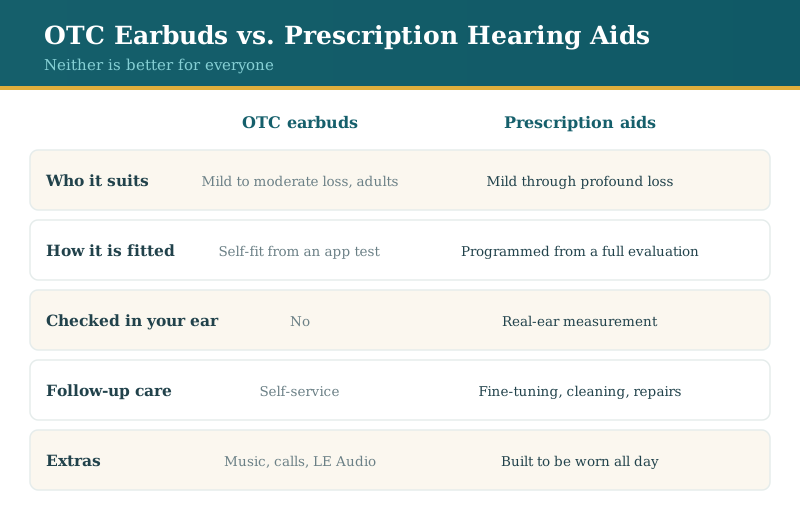
Neither is better for everyone, and the right one depends on your hearing. The table below sets them side by side. Our guide to OTC and prescription hearing aids goes into more detail.
| OTC earbuds (Galaxy Buds hearing aid feature) | Prescription hearing aids | |
|---|---|---|
| Who it suits | Adults who sense a mild to moderate loss | Loss from mild to profound, including one-sided loss and complicated cases |
| How it is fitted | You fit them yourself after a five-minute test in the app | Set from a full evaluation |
| Verification | None. Nobody measures the sound that reaches your eardrum | Confirmed with real-ear measurement |
| Follow-up | You adjust on your own | Fine-tuning, cleaning and repairs at the clinic |
| Extras | Music and calls. Per audioXpress, the Buds4 line also adds Bluetooth LE Audio and Auracast | Designed for all-day wear |
How it compares with AirPods Pro
Apple's AirPods Pro hearing aid feature received FDA authorization in September 2024. It follows a similar plan: a hearing test, a self-fit, and amplification in the earbuds. Samsung offers the Android version of the idea. Reports suggest both can help mild to moderate loss. We have not seen independent head-to-head testing, so we cannot say which sounds better. The better choice is usually the one that matches your phone.
When to get tested first
Get a professional evaluation before you rely on the app if you have sudden hearing loss, loss that is much worse in one ear, dizziness, ear pain or drainage, ringing in one ear only, trouble understanding words even when they are loud, or a family history that worries you. The same goes if you already struggle in quiet rooms. Those signs can point to loss beyond what an OTC device is built for. A hearing evaluation takes under an hour, and the results help whichever device you choose.
Does Medicare or Medi-Cal pay for this?
In general, Original Medicare pays for neither hearing aids nor OTC earbuds. Some Medicare Advantage plans include a hearing allowance or an OTC benefit, and the rules differ by plan. If you have Medi-Cal, ask your plan what it covers. Open enrollment is coming, so see our page on Medicare open enrollment and hearing benefits.
Status and last update
Last updated September 30, 2026. What changed: nothing yet, because this is the first version. We will revise it once Samsung's rollout goes live or independent testing appears. Sources: Samsung's announcement, Wareable, HearingTracker, audioXpress and eWeek.
Medical information notice
We wrote this to inform, and it is not medical advice. Earbud prices are retail prices for a gadget and say nothing about what hearing care costs. Not sure an OTC device will be enough? A hearing evaluation will answer that.
Get one email when Samsung's update goes live.
We will write once, when we see confirmation that the hearing aid feature is available.
Frequently asked questions
Your questions, answered
Will it work with my hearing aids?
It is a feature of the earbuds themselves, so it amplifies sound through the earbuds. We have not seen Samsung say it works alongside prescription hearing aids. If you already wear hearing aids and they work well, do not swap or stack devices without talking to us.
Can I use it while I wait for my hearing aid fitting?
If the update is live on your earbuds and your loss is mild to moderate, it may help as a short-term step. Keep your appointment, though, and do not delay care for warning signs such as sudden loss or hearing that is worse in one ear.
What should I bring to a hearing evaluation?
Bring your hearing concerns, a medication list, your insurance information, any earlier hearing tests, and any hearing aids or accessories you use now. If you tried the Samsung test, bring the phone too, so we can compare its audiogram with ours.
How far can I trust the audiogram in the app?
In Samsung's own validation of 367 participants, the app's test differed from clinic audiometry by a median of 3.75 dB. That is encouraging, but it is Samsung's data and it does not check your ears for wax or other causes of hearing loss.
I use an iPhone. Can I use this?
Samsung lists a compatible Galaxy phone as a requirement, so an iPhone is not a match. Apple has its own AirPods Pro hearing aid feature, which received FDA authorization in September 2024.
Would Medicare pay for these earbuds?
Original Medicare generally does not cover hearing aids, and OTC earbuds are not covered either. Some Medicare Advantage plans have an OTC benefit, so ask your plan directly.