


Hearing & Everyday Life
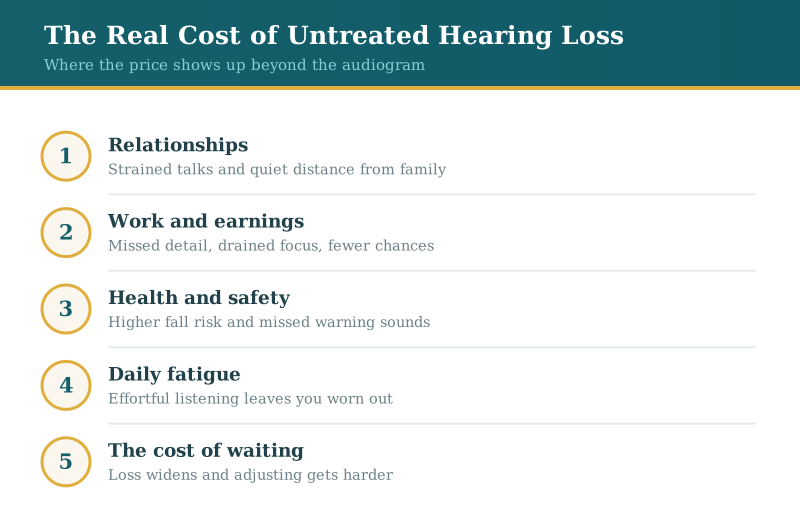
Some of that cost lands in your wallet, and a good deal of it never touches money at all. The financial side is real, but so is the strain on the people around you, the effort your brain spends decoding half-heard speech, and the safety cues that stop reaching you on time. Looking at all of it together tends to change how the decision feels.
None of this is meant to alarm you. It is meant to give you an honest picture before the loss deepens. Weighing the benefits of treatment against the slow accumulation of costs is exactly the kind of decision our San Mateo and San Carlos team can help you think through.
At a glance
- The cost of untreated hearing loss is spread across relationships, work, health, and finances, not concentrated in one place.
- Waiting tends to make loss harder to adapt to later, not easier.
- Many of the heaviest costs, like strained relationships and daily fatigue, never show up as a dollar figure.
- A hearing evaluation is a low-stakes way to see where you actually stand before deciding anything.
The strain on your closest relationships
The people who notice hearing loss first are usually the ones you talk to most. Repeated requests to say it again wear on a marriage. Grandchildren get harder to follow at a noisy dinner. Over time, some people start steering clear of the gatherings that used to be the best part of the week, which reads to family as distance rather than difficulty. Restoring clearer conversation is one of the fastest changes people report after treatment, and it is a large part of the benefits of treating hearing loss.
What it costs you at work
On the job, hearing loss taxes you in ways that are easy to misread. Video calls where voices overlap, a manager who speaks softly, a client detail caught only halfway. Straining to keep up leaves less energy for the actual work, and missed information can look, unfairly, like inattention. For people still building a career, untreated hearing loss has been associated with lower earnings and fewer advancement opportunities, which makes early treatment as much a practical decision as a health one.
The health and safety side of the ledger
Hearing does quiet safety work all day: a smoke alarm at night, a car you did not see, a change in how your own body sounds. When that input fades, the risks are not just about missed sirens. Lin and Ferrucci, writing in Archives of Internal Medicine in 2012, associated every 10 decibels of hearing loss with roughly 1.4 times the odds of a fall, and untreated hearing loss is also associated with faster cognitive decline. Treatment is not a guarantee against any of this, but leaving hearing unaddressed removes one of the more manageable factors from the equation.
The mental energy you spend without noticing
There is a reason a long day of hard listening feels like a long day of hard work. When speech comes in blurred, your brain fills the gaps by working overtime, and that effort has to come from somewhere. People describe it as being wiped out after a family lunch or unable to focus by late afternoon. Well-fit hearing aids aim to make listening feel less like decoding, which frees that energy for the conversation itself rather than the labor of catching it.
The financial math of waiting
The dollar cost is the part most people fixate on, and hearing aids are a genuine investment. But waiting has its own price. Loss that goes untreated often widens, so the help you eventually need may be greater, and adapting to devices is generally easier when the brain has not spent years without certain sounds. Many people are also surprised by what their coverage allows once they check; our notes on insurance and hearing care walk through where to look. Delay rarely makes the purchase cheaper. It usually makes the adjustment harder.
Adding it up before you decide
Before you write off an evaluation as premature, it is worth putting all of these columns side by side rather than judging your hearing by whether you can still get by. If you find yourself turning up the television, dodging phone calls, or nodding along without quite following, those are the signals that the costs have already started. A straightforward hearing test tells you exactly where you stand, and for older adults weighing their options, our guidance on hearing aids for seniors explains what treatment can realistically look like.
Frequently asked questions
What patients often want to know
Is treating hearing loss really worth the expense?
For most people, the value shows up well beyond the audiogram: easier conversations, less daily fatigue, and one fewer risk factor for falls and cognitive decline. When you weigh those against the quieter costs of waiting, the expense reads differently than it does in isolation. A hearing evaluation is the sensible place to start pricing the decision honestly.
Can I just wait until my hearing gets worse?
You can, but waiting rarely works in your favor. Hearing loss that goes unaddressed tends to widen, and the brain adapts to hearing aids more readily before it has spent years missing certain sounds. Acting earlier usually means a smoother adjustment, not a wasted one.
My family is more bothered by it than I am. Is that normal?
Very much so. The people closest to you often register hearing loss before you do, because they are the ones repeating themselves. If loved ones have raised it, that is worth taking seriously rather than brushing off. Our team can check your hearing gently and explain what the results mean without any pressure.