


Cost & Insurance
Where the numbers grow is hearing aids, and that is where most of the range you see online comes from. Two people can leave the same clinic having paid very different amounts, shaped by the technology they chose and whether the care was folded into the device price. A real estimate depends on your hearing, your goals, and your insurance, which is why a consultation gives a truer picture than any chart.
Much of what shapes the final price is visible once you know which questions to ask. Cost also tracks where you live; here on the Peninsula, prices tend to follow the broader Bay Area market rather than national averages. Understanding the pieces makes it easier to compare offices fairly and to see what real value looks like beyond the sticker.
At a glance
- The price of seeing an audiologist splits into three parts: the visit, any devices, and ongoing care.
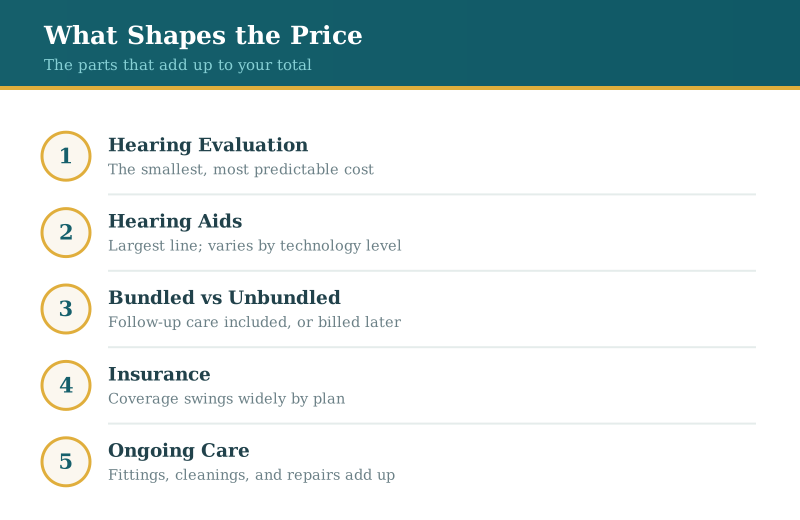
- A hearing evaluation is the smallest and most predictable cost; hearing aids account for most of the range.
- Insurance coverage varies widely by plan, so confirm your benefits before you commit.
- Bundled and unbundled pricing package follow-up care differently, so ask which one an office uses.
Start with the evaluation
The first real cost is the hearing test, and it is usually the gentlest one. A full diagnostic hearing evaluation measures how you hear across pitches and how well you follow speech, then gives you results you can act on. Some offices offer a brief screening at no charge, while a complete diagnostic workup costs more because it is more thorough and becomes the basis for any treatment. Either way, you leave knowing where your hearing stands, which has value even if you buy nothing else that day.
Hearing aids: where most of the cost sits
If you move ahead with devices, hearing aids will be the largest line by a wide margin. Prices climb with the level of technology: how well a device separates speech from background noise, adjusts on its own, and connects to your phone. Entry-level and premium models can differ substantially, and neither is the right one until it is matched to your hearing and your daily life. Comparing brands side by side, rather than chasing the newest chip, tends to be the smarter way to spend.
Bundled versus unbundled pricing
This distinction is worth understanding before you compare quotes. Under bundled pricing, the cost of the device includes years of follow-up visits, adjustments, and cleanings. Under unbundled pricing, you pay less up front and then pay separately for those services as you use them. Neither is automatically cheaper; it depends on how much fine-tuning you expect to need. Ask any office which model its price reflects, so you are comparing like with like.
Where insurance fits in
Coverage is the biggest variable and the hardest to generalize. Some plans pay for a hearing test but nothing toward devices; others include a hearing aid allowance that renews every few years; Medicare's core coverage has historically been limited, though many Medicare Advantage plans add a hearing benefit. Because the details swing so widely, the only reliable figure is the one tied to your own plan. Our team can review your insurance benefits and tell you plainly what is covered before anything is ordered.
The costs that come after
A device is less a one-time purchase than the start of a relationship. Budget for the follow-ups that keep hearing aids working: the fitting and fine-tuning that dial them in over the first weeks, routine cleanings, replacement domes and wax filters, batteries or charging, and the occasional repair. Under a bundled plan many of these are already included; under an unbundled one they are billed as you go. Either way, they are real and worth penciling in.
How to plan before you commit
A little preparation keeps the price from surprising you. Before you decide, ask for an itemized quote that separates the devices from the services, confirm your insurance benefits in writing, and ask about trial periods and return policies so a costly choice is not a permanent one. If cost is a concern, say so directly; there are often options across price points, including programs geared toward seniors. When you are ready, you can reach our offices and we will walk you through the numbers before you spend anything.
Frequently asked questions
Your questions, answered
How much does a hearing test cost?
It depends on the type. A quick screening is sometimes free, while a full diagnostic evaluation carries a modest fee because it is far more detailed and guides any treatment that follows. When you call, ask which kind you are booking and what it includes, so there are no surprises at the desk.
Does insurance cover hearing aids?
Sometimes, and it varies more than almost anything else in this process. Certain plans offer a device allowance, some cover only testing, and traditional Medicare has historically paid little toward the aids themselves. The dependable answer comes from checking your specific benefits, which we are glad to do with you.
Why do hearing aid prices vary so much?
Most of the spread comes from the level of technology and from what is bundled into the price. A premium device does more automatically in noise and connects to more of your gadgets, and a bundled price also buys years of follow-up care. Two quotes can look far apart simply because one includes services the other bills later.