


Hearing Research
A team at Case Western Reserve University published the first full-body map of squid lateral lines in Current Biology in early October 2026. The researchers say squid are a promising model for studying how hearing works and how it fails. It is basic science, and it points to no treatment. As of October 8, 2026, we found only press coverage of the paper, and we have not read the full text.
We are an audiology practice in San Mateo and San Carlos, so we read this one with a practical eye. Below is what the team found, how your own hair cells work, and what really protects them today.
At a glance
- A team led by Brian McDermott at Case Western Reserve University mapped hair cells across a squid's whole body. The paper appeared in Current Biology in early October 2026.
- Squid hair bundles appear to vary in length, which may tune cells to different frequencies. Fish lateral lines use bundles of uniform length.
- In people, damaged hair bundles are a common cause of hearing loss. Squid may become a model for studying how that damage happens.
- This is early, basic science. It points to no treatment and changes nothing about what helps hearing loss today.
What the researchers found
Squid have a lateral line, a set of hair cells that sense movement in the water. The team used light sheet microscopy, which lights tissue one thin layer at a time and builds 3D images without damaging it. They found hundreds more hair cells than previously known, covering the squid's whole body. Fish lateral lines have hair bundles of uniform length. Squid bundles appear to vary in length, and the researchers say that looks like tuning to different frequencies, much as the human cochlea does. They concluded that squid skin works somewhat like a human ear. The authors are Haoming Wang, Carsten Wolff, Nicolas Pintozzi, Anna-Maria Petriv and Brian McDermott.
How your own hair cells work
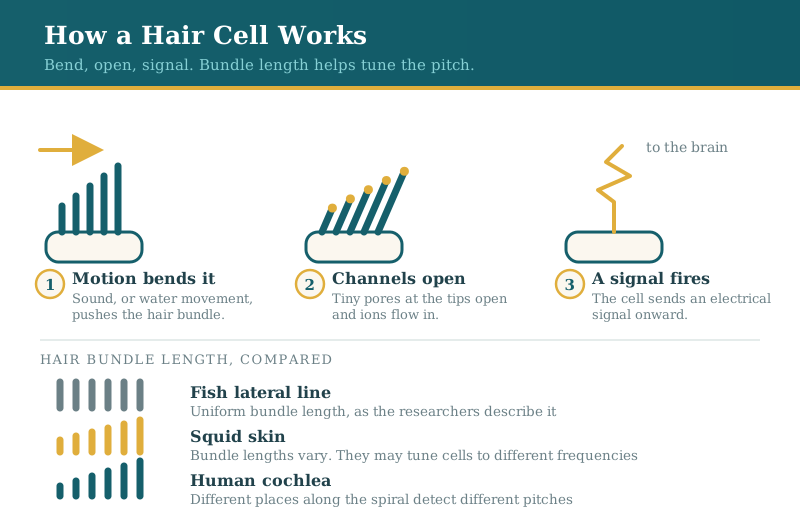
Inside your cochlea, the snail-shaped part of the inner ear, thousands of hair cells sit on a membrane that ripples when sound arrives. Each cell wears a bundle of tiny hair-like projections called stereocilia. When the bundle bends, pore-like channels at the tips open, chemicals flow in, and the cell makes an electrical signal that travels toward the brain. The National Institute on Deafness and Other Communication Disorders adds that cells near the wide end of the cochlea detect higher pitches and those toward the center detect lower ones. Our page on how the ear and brain work together follows the whole path.
Why bundle length matters
The researchers' reading is that bundle length may help tune a cell to a particular frequency. A body with a range of lengths could then respond to a range of frequencies, which is how your own ear sorts high pitches from low ones. The squid finding is interesting because fish lateral lines, which are often used in this research, have bundles of uniform length. If squid really do vary bundle length on purpose, they may show how a living animal controls that setting. The researchers say “appear” and “may,” and so do we.
| Fish lateral line | Squid skin | Human cochlea | |
|---|---|---|---|
| Where the cells sit | Along the fish's body | Across the squid's whole body surface | Inside the snail-shaped cochlea |
| What they sense | Water movement | Water movement, as the coverage describes it | Sound |
| Bundle length | Uniform, according to the researchers | Appears to vary, which may tune cells to different frequencies | Different places along the cochlea detect different pitches |
Why scientists study animals like squid
The inner ear is hard to reach in a living person, so researchers learn from animals whose hair cells are easier to see. The squid's cells sit on the skin. McDermott, who led the work, noted that when a child is born deaf or an adult loses hearing, it is often the hair bundle that has been damaged. Studying squid bundles, he said, holds promise for understanding how that happens. That is a research direction, not a treatment.
The honest caveat
Nothing in this study treats, prevents or cures hearing loss. It maps a squid. The link to human hearing loss is a possibility, and studies like this take years to lead anywhere, if they do. If a headline ever promises a cure from a result like this, ask who it was tested in and whether it is approved care. Our gene therapy page offers a simple way to read those headlines.
Three squid facts worth sharing
First, squid skin carries hundreds more hair cells than scientists knew about, across the whole body. Second, those cells appear to vary in bundle length, which may tune them to different frequencies. Third, in people, damaged hair bundles are a common cause of hearing loss, and our page on noise-induced hearing loss explains that hair cells do not regenerate. That last fact is the reason prevention beats repair.
What protects your hair cells today
Loud noise wears hair cells down. Turn earbuds down, wear hearing protection around loud tools and concerts, and give your ears quiet time. Read our page on earbuds and hearing loss for the habits that matter. Ringing in your ears can signal that something in the hearing system has changed, and our tinnitus pages explain what to do. The most useful step is a hearing test. Our guide to reading your audiogram shows what the results mean, and our sister practice covers the same ground in its page on noise-induced hearing loss.
Status and last update
Last updated October 8, 2026. What changed: this is the first version. For another new study from this week, read our page on the Vanderbilt study linking hearing tests and genetics. To book, find our San Mateo office or our San Carlos office. Sources: An anatomical map of squid lateral lines, Current Biology, DOI 10.1016/j.cub.2026.07.056, Case Western Reserve University news story, Phys.org report, Tech Explorist report and NIDCD, How do we hear?.
Medical information notice
We wrote this to inform, and it is not medical advice. It reports early research on squid that does not apply to patient care today. Worried about your hearing? A full hearing evaluation usually takes about an hour. Call 650-342-9449 to book at our San Mateo office, 88 N. San Mateo Drive, or our San Carlos office, 1008 Laurel Street.
Frequently asked questions
A few questions worth asking
Do squid have ears?
Not like ours. Squid have hair cells on their skin that sense movement in the water, and researchers say they work somewhat like a human ear. The coverage does not claim squid hear sound the way people do.
What did the squid study find?
Researchers at Case Western Reserve University made the first full-body map of squid lateral lines. They found hundreds more hair cells than known before. Squid hair bundles also appear to vary in length, while fish bundles are uniform.
Could squid research lead to a cure for hearing loss?
Nobody can say that today. The researchers call squid a promising model for studying how hair bundle damage happens. That is a research direction, not a treatment, and studies like this take years.
What are hair cells, and why do they matter for hearing?
Hair cells are sensory cells in the inner ear. Their hair-like bundles bend with sound, and that opens channels and creates an electrical signal for the brain. In people, damaged hair cells do not regenerate, so protecting them matters.
How can I protect my hair cells?
Keep earbud volume down, wear hearing protection around loud noise, and give your ears quiet time afterward. A hearing test shows where your hearing stands now. See our page on noise-induced hearing loss for more.