


Hearing & Awareness
Musicians and other public figures have spoken candidly about facing this, and Paul Simon is among those who have described losing hearing suddenly. We are careful not to guess at anyone's private medical details, but these public accounts do something useful: they pull a hidden problem into daylight and give the rest of us permission to take our own ears seriously. A hearing evaluation is a small step that a famous name can nudge someone into finally taking.
The most important lesson from these stories is about timing. Some hearing loss creeps in over years, but the kind that appears in a day is a different animal. It is treated as an emergency, and knowing the difference can change the outcome.
At a glance
- A hearing loss that comes on within hours or overnight is a medical emergency.
- Sudden sensorineural hearing loss is most treatable when care begins within a few days.
- It often strikes one ear and may arrive with fullness, ringing, or dizziness.
- Public accounts help reduce stigma, but the real action is getting your own hearing checked.
Why a famous name changes the conversation
Hearing loss carries a quiet stigma, and plenty of people delay dealing with it out of embarrassment or the belief that it only happens much later in life. When a well-known musician or actor says out loud that their hearing changed, it chips away at that reluctance. The value is not in the celebrity itself but in the permission it grants: if someone at the top of their field can talk about it plainly, so can you. That shift from private worry to open question is often the thing that finally gets a person to book an appointment.
Sudden hearing loss is treated as an emergency
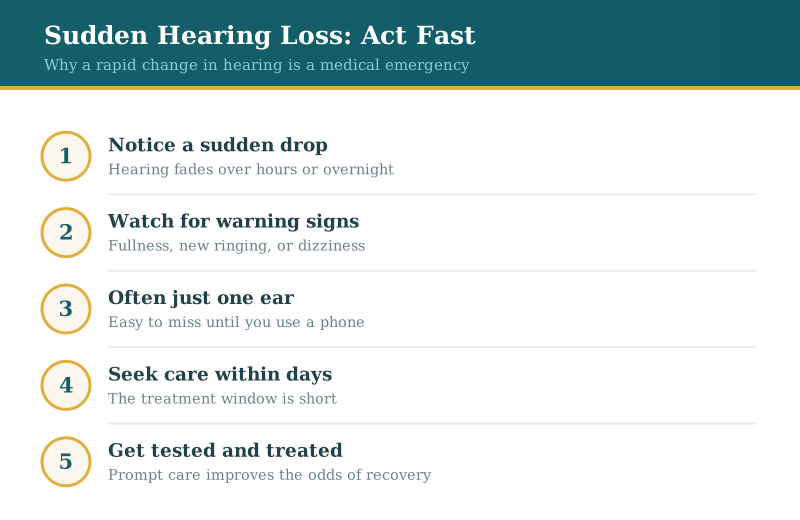
When hearing drops off rapidly in one ear over a few hours or shows up when you wake, doctors call it sudden sensorineural hearing loss, and they do not wait to see whether it clears on its own. Prompt treatment gives the best chance of recovery, and the window is short, often measured in days rather than weeks. The NIDCD's page on sudden deafness and why it counts as an emergency sets out the same timeline. Steroids and other therapies tend to work better the sooner they start. If your hearing falls off suddenly, the safe move is to be seen right away rather than waiting out the weekend.
The signs worth acting on
The hallmark is speed. You might notice that a phone feels dead against one ear, that voices sound muffled or tinny, or that one side has a stuffed, underwater quality that does not pop when you swallow. Some people also hear a new ring or roar, a form of tinnitus, or feel unsteady on their feet. None of these guarantees a serious cause, and sometimes it really is just wax or a cold. The point is that you cannot tell the difference at home, and the harmless explanations can wait while the serious one cannot.
What to do in the first few days
Treat a sudden change the way you would sudden chest pain or a vision problem: get evaluated fast. Call your doctor, an urgent care, or an audiology practice and say clearly that your hearing dropped suddenly, since that phrase moves you up the queue. Skip the wait-and-see instinct. Every day that passes can narrow the odds of a full recovery, so the goal is to have your hearing looked at within a couple of days, not after the symptom has hung around for a month. If you are unsure where to turn, reach out to our team and we will help you get seen quickly.
How an evaluation and treatment work
A visit starts with a look in the ear canal to rule out something simple like wax, followed by a hearing test that maps exactly how much and what kind of loss is present. That test tells the clinician whether the problem sits in the outer or middle ear, which is often fixable on the spot, or in the inner ear and nerve, which is the urgent kind. From there, care may involve medication and a referral to an ear specialist. When loss turns out to be lasting, well-fit hearing aids can restore a great deal of what a single ear stopped delivering, and modern devices handle one-sided loss far better than older ones did.
Gradual change deserves attention too
For every dramatic overnight story, there are many more people whose hearing has slipped so slowly that they adjusted without realizing it. Public conversations tend to spotlight the sudden cases because they are vivid, but the slow kind is far more common and just as worth addressing. If you find yourself turning the television up, missing words in a noisy restaurant, or asking people to repeat themselves, a baseline check is a sensible idea. Options tailored to an older ear, including hearing aids for seniors, have come a long way and are easier to live with than most people expect.
Turning a headline into a phone call
A public story does its job only if it moves you to do something with your own hearing. Whether your concern is a sudden shift that needs urgent attention or a gradual fade you have been meaning to check, the first step is the same: an honest look at how you hear now. Our clinicians in San Mateo and San Carlos test hearing carefully and explain what the results mean without pressure or alarm. You can learn about the people who would care for you on our team page, then schedule a hearing test when you are ready.
Frequently asked questions
A few questions worth asking
How quickly do I need to be seen for sudden hearing loss?
Aim for within a couple of days, and sooner is better. Sudden sensorineural hearing loss responds best to treatment that starts early, so a rapid drop in one ear is a reason to be seen promptly rather than to wait it out. If it is a weekend, urgent care is a reasonable place to start.
Can sudden hearing loss recover on its own?
Sometimes it does, but there is no way to know in advance who will be lucky, and waiting to find out can forfeit the benefit of early treatment. Because prompt care improves the odds, clinicians treat it rather than gamble on spontaneous recovery. The safe assumption is that it needs attention.
Does it usually affect one ear or both?
One ear is by far the more common pattern, which is part of what makes it easy to overlook. People sometimes notice it only when they hold a phone to the affected side. A sudden change in both ears at once is less typical and also warrants urgent evaluation.
My hearing faded slowly, not suddenly. Should I still get it checked?
Yes, and this describes most hearing loss. Gradual change is easy to adapt to without noticing how much you are missing, so a baseline hearing test is worthwhile even when nothing feels urgent. Catching it early gives you more comfortable options.
What actually happens during a hearing evaluation?
It is painless and usually takes under an hour. A clinician examines your ear canals, then plays a series of tones and words through headphones to chart what you hear. You leave with a clear picture of your hearing and, if anything needs addressing, a plain explanation of the choices in front of you.