


Recognizing Hearing Loss
Hearing rarely disappears all at once. It tends to thin out at certain pitches first, which is why you might catch most of a conversation yet keep missing the same words, or hear that someone is talking without making out what they said. The signs also differ from person to person, so this is less about one dramatic moment and more about a pattern that keeps repeating.
If any of the signs below sound familiar, a simple hearing evaluation at one of our San Mateo or San Carlos offices will tell you where you stand. There is no pressure and no downside to knowing, and our team explains the results in plain language.
At a glance
- Common early signs include turning up the volume, asking for repeats, and straining to hear in noise.
- The people around you often notice hearing changes before you do.
- Sudden hearing loss in one ear is a medical urgency — seek care right away.
- A hearing evaluation sorts reversible causes like earwax from lasting changes.
The signs you can notice yourself
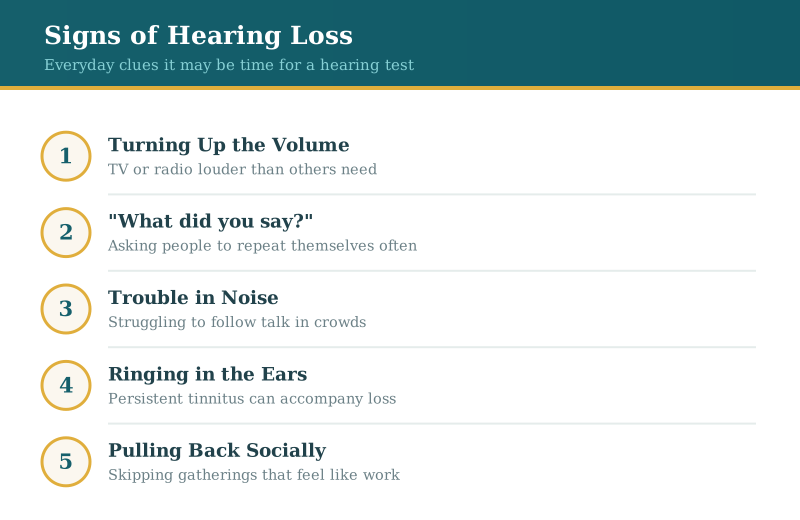
Some clues are yours to catch. You find the volume on the television or radio creeping up while others in the room think it is already loud. Phone calls feel harder than they used to, especially with an unfamiliar voice. You hear people speaking, but the words come out muddy, so you fill the gaps by guessing from context. A ringing or buzzing that no one else hears can show up alongside these changes; if that sounds familiar, our overview of what tinnitus is explains how it often travels with hearing loss.
What the people around you notice
Others frequently see the pattern before you do. They may point out that you ask 'what?' more than you used to, that you answer a slightly different question than the one asked, or that you watch faces closely to keep up. Family might grow tired of repeating themselves, or notice you nodding along when you have clearly lost the thread. None of this means anyone is at fault. It simply means the signal reaching your ears is not as clear as it once was, and a hearing test can measure exactly where the gaps are.
Sounds and settings that get harder first
Hearing loss rarely takes every sound at once. Higher-pitched sounds usually go first, which is why women's and children's voices, birdsong, or the beep of an appliance can fade while deeper voices still come through. Background noise makes everything tougher: a restaurant, a family gathering, or a car with the windows down can turn speech into work. If you catch yourself avoiding those places because following along is exhausting, that avoidance is itself a sign worth taking seriously.
When it is wax, not the nerve
Not every muffled ear points to permanent change. A plug of earwax can dull your hearing quickly and clear up just as fast once it is safely removed. So can fluid behind the eardrum from a cold or allergies. This is one reason guessing at the cause is a poor substitute for having it checked: some hearing changes reverse with simple care, while others call for a different plan. An evaluation sorts out which kind you are dealing with.
Signs that call for prompt attention
A few patterns should not wait. Hearing that drops suddenly in one ear, over hours or a day or two, is treated as a medical urgency; the National Institute on Deafness and Other Communication Disorders advises seeing a professional right away, because prompt treatment can matter for recovery. The same holds for hearing loss paired with dizziness, ear pain, drainage, or ringing that starts abruptly in one ear. If any of that describes you, call us or your physician now rather than reading further.
What to do once you recognize the signs
Recognizing the signs is the useful part; acting on them is simple. A hearing evaluation is quick and comfortable, and it turns a vague worry into clear information. If treatment makes sense, modern hearing aids are smaller and more capable than many people expect, and a careful fitting matters far more than the price tag on the device. For older adults weighing whether it is worth the effort, our guide to hearing aids for seniors walks through what to expect. When you are ready, our team is glad to help you start.
Frequently asked questions
What patients often want to know
What are the earliest signs of hearing loss?
Often it is subtle things: turning the television up, asking people to repeat themselves, or finding group conversations harder than they used to be. High-pitched sounds and voices tend to fade first. Because the changes come on gradually, a hearing test is the most reliable way to confirm what you are noticing.
Can hearing loss come on suddenly?
It can. Hearing that drops sharply in one ear over a day or two is treated as urgent and should be checked immediately, since early treatment can improve the odds of recovery. Most age-related hearing loss, by contrast, builds slowly over years.
Is my hearing problem just earwax?
It might be. Earwax and fluid can muffle hearing and often clear up with simple, safe earwax removal or a little time. Other causes are lasting. The only way to know which you have is to have your ears looked at and your hearing measured.
When should I get a hearing test?
If friends or family have mentioned it, if you avoid noisy places, or if you strain to follow everyday conversation, it is a good time. There is no need to wait for it to get bad. Booking a visit early gives you a clear baseline and more options.