


Hearing & Communication
That habit has a name among audiologists: bluffing. It is the nodding, the vague smile, the well-timed 'oh, definitely' offered when you did not actually hear the question. It feels like the polite choice in the moment, and for a while it works. The trouble is that it costs more than it seems to, and the price lands on the parts of life you care about most.
If you recognize yourself in that, you are in good company, and there is a straightforward next step. A hearing evaluation tells you what is really going on, and our team can walk you through the results without any pressure to decide on the spot.
At a glance
- Bluffing — nodding and smiling through what you cannot hear — is a common way people mask hearing loss.
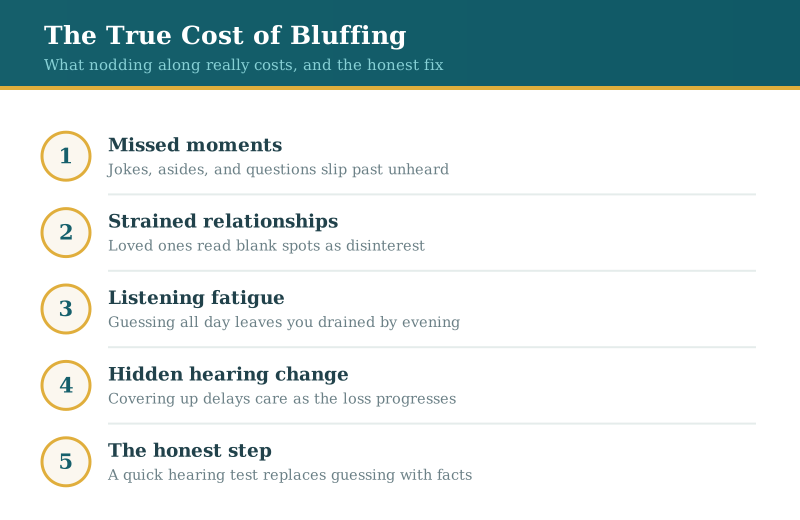
- It carries a real cost: strained relationships, missed moments, and daily listening fatigue.
- Covering up a hearing change can delay helpful care while the underlying loss continues.
- A simple hearing evaluation replaces guesswork with clear answers and honest options.
What bluffing looks like day to day
Bluffing is rarely a decision. It is a set of small reflexes: laughing when others laugh, answering 'yes' to a question you half-heard, choosing the seat where you can watch lips, steering talk toward topics you can predict. In a quiet room with one person facing you, none of it shows. Add background noise, a group, or a soft-spoken grandchild, and the gaps widen. You catch the shape of a sentence but lose the words that carry its meaning.
The reasons it feels easier
No one bluffs to be difficult. Asking someone to repeat themselves a third time feels like an imposition, and admitting you did not hear can feel like admitting you are getting older. So you cover. Pretending keeps the conversation moving and spares everyone the awkward pause. The catch is that each cover-up trains you to accept a little less of what is being said, and the people around you slowly adjust to a quieter, less present version of you than the real one.
The social cost adds up
Relationships run on small exchanges: the aside in the car, the joke across the table, the question your spouse asks from the next room. When those get missed or answered wrong, the misfires pile up. Loved ones may read your blank spots as disinterest or distraction. You might pull back from noisy restaurants and big gatherings because the effort no longer feels worth it. This kind of gradual withdrawal is one reason untreated hearing loss is associated with social isolation, and it tends to strain exactly the connections that matter most.
The mental tax of guessing
Guessing is not free. When sound arrives incomplete, your brain fills the missing pieces from context, and that work runs in the background through every conversation. By evening you may feel wiped out without knowing why. Audiologists call this listening fatigue, and it is common among people who have been compensating for a hearing change for years. A properly tuned hearing aid fitting is meant to lower that effort, so following a conversation feels less like decoding and more like simply listening.
What the nodding hides
The real problem with bluffing is that it works well enough to postpone the fix. A hearing change usually comes on gradually, and a solid bluffing habit can hide it from you and everyone else for years. Meanwhile the underlying loss is not standing still. Skipping an evaluation also means missing anything a professional would want to check, from earwax buildup to changes worth monitoring over time. What looks like a harmless social shortcut can delay care that would genuinely help.
Better moves than pretending
There are honest alternatives that keep conversations flowing better than a fake nod ever will. Tell people how to help you: ask them to face you, to rephrase rather than simply repeat louder, and to get your attention before speaking. Pick the quieter side of the room. Say 'I missed that last part' instead of guessing. And when strategies alone stop being enough, hearing aids can do the heavy lifting that willpower cannot. For older adults especially, the right devices turn effortful listening back into ordinary conversation.
Trading guesswork for a clear answer
You do not have to keep bluffing to protect your pride or spare other people the trouble. A hearing test is short, painless, and tells you plainly where your hearing stands, whether that means no action for now or a clear set of options. If any of this sounds familiar, book an evaluation at one of our San Mateo or San Carlos offices, and our audiology team will explain what the results mean and what, if anything, is worth doing next.
Frequently asked questions
Questions patients ask us
Isn't a little nodding along harmless?
Now and then, sure. The trouble starts when it becomes your default way of handling conversations, because that is when the misses add up and a real hearing change stays hidden. If you find yourself bluffing often, it is worth having your hearing checked rather than guessing.
How can I tell if I am bluffing more than I realize?
A few signs give it away: you laugh a beat after everyone else, you avoid the phone or noisy restaurants, and you lean on watching faces to follow along. Family members often notice before you do. Any of these is a reasonable reason to schedule a hearing test.
What do I say instead of pretending to hear?
Be specific about what you missed. 'I caught the first part but not the last few words' helps far more than a general 'what?' and keeps the conversation moving. Asking people to face you and rephrase, rather than shout, makes an immediate difference too.
Will I definitely need hearing aids?
Not necessarily. An evaluation might show your hearing is fine, that earwax is the culprit, or that a change is mild enough to simply monitor for now. If devices would help, you will get honest options rather than a hard sell. The point of testing is information, not a foregone conclusion.
My spouse bluffs constantly but won't get tested. Any advice?
Lead with the specific moments you both miss rather than the phrase 'hearing loss,' which can feel loaded. Offer to come along to the appointment so it feels like a shared errand. Many people agree once it is framed as checking, not committing, and our team keeps that first visit low-pressure.