


Hearing Aids & Connectivity
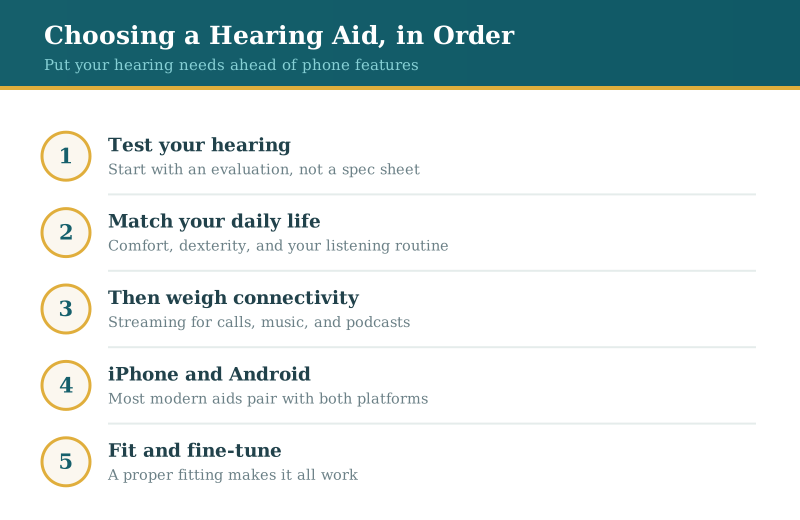
The order that serves people well is simple: sort out how much help your hearing needs, then look at connectivity. A hearing aid that pairs flawlessly with your phone but underperforms in a noisy restaurant has solved the wrong problem. That is why a hearing evaluation comes before any talk of brands or Bluetooth.
Once your hearing needs are clear, connectivity turns into a useful tiebreaker among the devices that already suit you, and the differences between phone platforms matter less than they first appear.
At a glance
- Choose a hearing aid for how well it treats your hearing first; connectivity comes second.
- Most current hearing aids stream to both iPhone and Android, so your phone rarely limits the choice.
- Auracast is expanding wireless streaming, but a proper fitting matters more than any single feature.
Your ears come before your phone
The right hearing aid is the one that brings back the sounds you have been missing, sits comfortably from morning to night, and matches your dexterity and eyesight. Those needs differ from one person to the next, so the process starts with a test, not a spec sheet. For an older adult who mainly wants clearer conversation at home, the priorities look different than they do for someone still working in busy rooms. Sorting that out first keeps a phone feature from steering you toward a device that does not serve your ears.
What streaming adds day to day
When a hearing aid connects to your phone, calls, music, podcasts, and video can play directly through the devices instead of the phone's speaker. For many people that is the moment hearing aids start to feel modern: a phone call arrives in both ears, clear and hands-free. Some models also let you adjust volume or switch listening programs from an app. These are real conveniences worth having, but they sit on top of good hearing, not in place of it.
iPhone, Android, and 'Made for' labels
You may have seen 'Made for iPhone' on hearing aid packaging and wondered whether an Android phone leaves you out. In practice, most current hearing aids from the major brands stream to both iPhone and recent Android phones, though the exact features can vary by pairing. If you are devoted to one platform, it is worth confirming the details, but the phone in your pocket rarely rules out a device that fits your hearing well. We can check compatibility for your specific phone before you commit.
Auracast and where streaming is heading
A newer standard called Auracast is beginning to change how wireless sound reaches hearing aids. It is designed to broadcast audio to many listeners at once, so a theater, airport, or lecture hall could one day send sound straight to your ears without a personal pairing. Support is still rolling out across phones and hearing aids, so for now it is more a reason for optimism than a box to check. Buying a device you cannot use well today, on the promise of a feature that is not yet widespread, is a poor trade.
Where a good fitting fits in
Whatever device and phone you land on, the fitting is what makes it work. A careful hearing aid fitting tunes the aids to your specific loss, sets comfortable levels, and makes sure the physical fit stays put through a long day. Connectivity gets set up here too, so your phone and aids talk to each other the way you expect. If streaming ever drops or the sound seems off, that is usually a tuning or pairing issue we can sort out, not a reason to start over.
Frequently asked questions
Your questions, answered
Do I need an iPhone to use hearing aids with my phone?
An iPhone is not required. Most current hearing aids stream to both iPhone and recent Android phones, though the specific features can differ from one pairing to the next. Bring your phone along and we will confirm what works with the devices you are weighing.
Should I wait for Auracast before buying hearing aids?
Waiting rarely pays off here. Auracast support is still spreading across phones and hearing aids, and hearing is easier to help the sooner you address it. A device that fits you today will keep helping as broader streaming standards arrive.
How do I know which hearing aid is right for me?
It starts with understanding your hearing, not comparing phone features. Our team tests your hearing, talks through your daily routine, and narrows the options to devices that genuinely fit your ears. From there, connectivity and phone pairing become an easy final detail, and you can reach us to set up a visit.