


From Dr. Emily McMahan, AuD
Early in my career I watched too many people leave appointments having been told to live with the noise, as if that were a treatment plan. That answer never sat right with me. Tinnitus is complicated, it behaves differently in every person, and it rewards a clinician who has the time and interest to sit with the details instead of rushing past them. Choosing to see tinnitus patients exclusively is what let me give it that kind of attention.
Silence is not something I can guarantee, and I would rather tell you that plainly than sell you a false hope. What I can offer is a thorough evaluation, honest explanations, and a plan shaped around your ears and your daily life. If you are curious how I ended up here, you can read a bit about my background, but the short version is that this condition deserves a specialist, and I decided to become one.
At a glance
- Tinnitus behaves differently in every person, so evaluation and care should be individualized.
- A focused tinnitus practice means more time spent on the details general appointments often skip.
- Tinnitus rarely disappears completely; realistic care aims for relief, control, and getting your attention back.
- Sound therapy, counseling, and education can meaningfully lower how much tinnitus intrudes on your day.
Why this became my whole focus
I did not set out to build a single-condition practice. It happened gradually, as I realized the tinnitus appointments were the ones I kept thinking about on the drive home. These were often the patients other clinics had run out of ideas for, and the ones for whom a patient, curious approach seemed to make the biggest difference. At some point the choice made itself: I would rather do one hard thing well than do everything only adequately.
How I explain the sound to patients
Much of the fear around tinnitus comes from not understanding it, so I spend real time on the explanation. In plain terms, it is sound you hear without an outside source, usually tied to changes in the hearing system and how the brain responds to them. You are also far from alone in this. Tinnitus is among the most commonly reported conditions in adults, as ASHA's page on ringing in the ears notes, and our page on what tinnitus is covers the basics. Once you understand that the noise is not a sign of something breaking, it usually feels less threatening, and that shift alone can loosen its grip.
Where a rushed appointment falls short
Tinnitus does not fit neatly into a fifteen-minute slot. It braids together hearing, stress, sleep, and attention, and untangling those threads takes conversation. In a general practice there is rarely room for that, so people get handed a leaflet and sent home. By seeing only tinnitus patients, I can keep my schedule built for the longer, slower visits this condition genuinely needs.
What to expect at your first visit
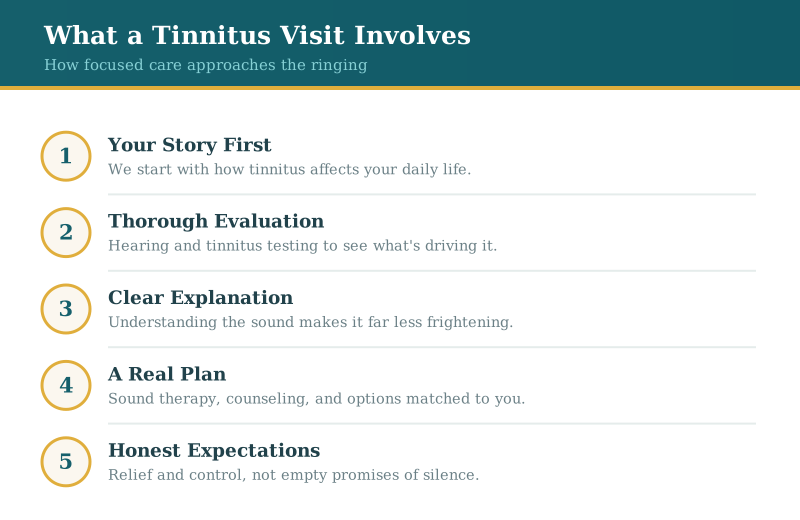
Your first appointment with me starts with listening, to your story before your ears. Then we measure, because clear treatment begins with a thorough hearing evaluation and tinnitus assessment that shows what we are actually working with. You will leave with an explanation you can repeat to your family and a concrete first step, not a vague reassurance. I would rather you understand your situation than simply feel comforted for an afternoon.
The tools I reach for
Nothing flips tinnitus off like a switch, so I work with a range of approaches and match them to the person in front of me. Sound therapy can make the noise less prominent by giving your brain something else to settle on. Structured programs, counseling, and, when they fit, some of the newer options we offer can retrain how much attention the sound commands. Which combination I recommend depends on your hearing, your goals, and how tinnitus is affecting your days.
When tinnitus doesn't travel alone
Tinnitus often arrives with company. Many people who hear it also have some degree of hearing loss, and treating that can ease the tinnitus as a welcome side effect. Others develop a painful sensitivity to everyday sound; if ordinary noise has started to feel too loud, sound sensitivity may be part of your picture and deserves its own attention. Sorting out what is driving what is a large part of my job.
What I can and can't promise
I will be honest about the ceiling of what care can do. For most people the goal is not an empty, silent room but a life where tinnitus fades into the background and stops running the show. Many of my patients reach a point where whole days pass without them noticing it. You can read some of their experiences in our patient reviews, and when you are ready you can reach out and I would be glad to meet you and begin.
Frequently asked questions
Common questions about Why I Focus Entirely on Tinnitus Care
Why do you only see tinnitus patients?
Focus lets me go deep. Tinnitus rewards time and pattern recognition, and by treating it exclusively I have seen enough variations to catch what an occasional case might miss. It also means the appointment is built around your condition rather than squeezed in beside routine visits.
Can you cure my tinnitus?
For most people, cure is the wrong word. Tinnitus care aims to reduce how loud and intrusive the sound feels until it no longer steers your day. Plenty of patients reach a point where they rarely think about it, which for practical purposes is the win we are after.
Do I need a hearing test if my hearing seems fine?
Yes, and it is worth doing even when your hearing feels normal. Tinnitus and hearing changes are closely linked, so a hearing evaluation often turns up a subtle loss that is feeding the noise. Knowing that shapes everything we do next.
What if other clinics told me to just live with it?
I hear this often, and it frustrates me on your behalf. 'Live with it' is not a plan; it is what gets said when there is no time to build one. There are real, evidence-based ways to lower tinnitus's grip, and finding the right mix for you is exactly the work I do.
How soon might I feel better?
Timelines vary more than anyone would like. Some people feel relief within weeks of starting sound therapy or simply making sense of what is happening; for others it is a slower, steadier climb. I would rather set an honest pace with you than promise a fast fix that does not hold.