


Hearing Aids & Follow-Up Care
A first hearing aid fitting is a starting point, not a final answer. Your brain has spent years adjusting to muffled sound, and it needs a few weeks to relearn voices, footsteps, and the hum of a refrigerator at their real volume. That adjustment period, along with a series of small tuning changes, is a normal part of getting comfortable rather than a sign of a bad purchase, which is also how ASHA describes settling in with new hearing aids.
So before writing off a set of aids, it helps to separate what people assume from what tends to be going on. In most cases the aid in the drawer is closer to working than its owner thinks.
'Once they're fitted, you're done'
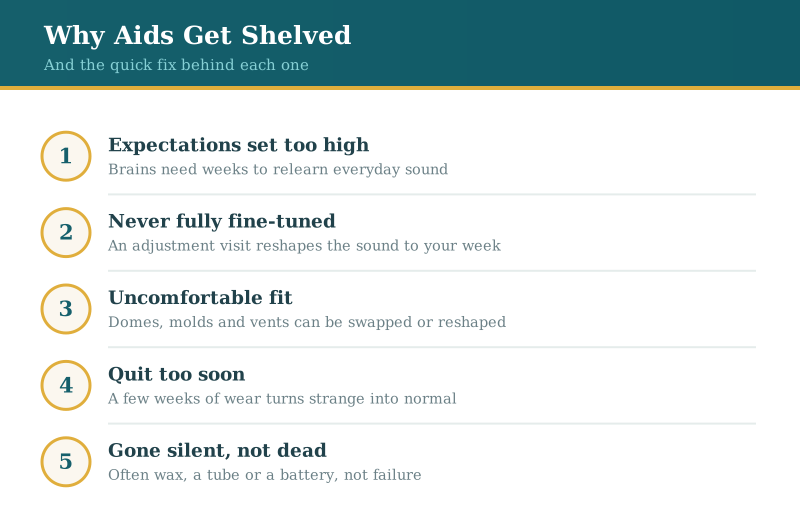
The misconception is that programming the aids and walking out the door is the whole process. In practice, fitting day sets a baseline that the following weeks refine. Once you have worn the aids through real conversations, a noisy restaurant, and a few phone calls, you will notice things a sound booth could never predict. A thorough fitting builds those check-ins in on purpose, so the settings can be shaped around your week instead of a first guess.
'If they sound wrong, they must be the wrong aids'
It is easy to assume that tinny voices or booming background noise mean you bought the wrong device. Far more often, it means the aids have not been fine-tuned yet. Modern hearing aids are adjusted by software across many pitch bands, and the first program is a conservative estimate. A short adjustment visit can soften sharpness, tame clatter in crowds, or lift the frequencies where speech lives. Owners are frequently surprised how different the same aids feel after one round of tuning.
'A little discomfort means they aren't for me'
Physical comfort gets written off as a dealbreaker when it is usually a solvable fit problem. An earpiece that rubs, a whistle of feedback, or a plugged-up 'in a barrel' feeling almost always traces back to the dome, mold, or vent, not to your suitability for hearing aids. Those details are exactly what a follow-up appointment exists to correct. If you wear glasses, a mask, or an oxygen cannula, mention it, because those change how a fit should be built.
'I tried them and they didn't work'
Expectations set the trap here. Someone hopes to switch the aids on and hear the way they did at twenty-five, and when the first day feels loud and strange, the aids come out and stay out. But an ear grown used to a muffled world needs a few weeks of steady wear to relearn ordinary sound, which in practice means daily wear rather than saving them for occasions. Staying with them through that stretch, while your provider trims the settings along the way, is what turns strange into natural. Giving up on day two rarely gives the aids, or your ears, a fair trial.
'It went silent, so it's finished'
When an aid goes quiet, plenty of people conclude it has died and retire it to the drawer. The cause is often a speck of earwax in the receiver, a cracked tube, trapped moisture, or a spent battery, all of them quick fixes. Before you replace anything, a hearing aid repair check can tell you whether the device needs a five-minute cleaning or a genuine repair. Even older aids are frequently worth restoring rather than replacing.
'Follow-up visits are just a sales pitch'
There is a suspicion that adjustment appointments are a way to sell you more. In truth they are where hearing aids succeed or fail. The people who stay happy with their aids are the ones who come back for tuning, cleaning, and the occasional reprogramming as their hearing shifts. If a provider treats the sale as the finish line, that is the warning sign, not the follow-up schedule. You can read how our patients describe that ongoing care in their reviews.
Frequently asked questions
What patients often want to know
How long before hearing aids feel normal?
Give it a few weeks rather than a few minutes. Most of the adjustment happens gradually as your brain relearns everyday sound, and a short follow-up or two moves it along by fine-tuning the settings to what you are hearing at home and at work.
My old hearing aids stopped working. Should I just buy new ones?
Not before someone looks at them. A quiet or dead aid is often a wax blockage, a worn tube, or moisture rather than a real failure. A hearing aid repair assessment will tell you whether a cleaning solves it or a new set truly makes sense.
The aids are uncomfortable. Can that be fixed without buying different ones?
In most cases, yes. Comfort issues usually come down to the dome, earmold, or venting, and those can be swapped or reshaped in a single appointment. Bring the aids in and describe exactly where and when they bother you, since that detail points straight to the fix.
Do I really need to come back after the fitting?
The follow-up visits are where hearing aids go from tolerable to genuinely useful, so yes. Skipping them is one of the main reasons aids end up unused. If you are not sure your current aids were ever dialed in, our team in San Mateo and San Carlos is glad to take a look, and you can set that up through our contact page.