


Hearing Aid Comfort
Here is what is going on. When something seals your ear canal, the low-frequency vibrations your own voice sends through the bones of your skull get trapped instead of slipping out the opening. Those trapped vibrations bounce back at your eardrum, and your voice takes on that hollow, talking-in-a-barrel quality. It is the same thing you notice when you press a finger against your ear and hum. A careful hearing aid fitting is meant to manage this, not ignore it.
The boominess is real, genuinely irritating, and also one of the more fixable parts of wearing hearing aids. Most of the frustration around it traces back to a handful of understandable but mistaken assumptions.
"The hearing aids must be defective"
This is the first thing many people reach for, and it makes sense, because the sound is so unnatural. But a boomy voice rarely points to a broken device. The occlusion effect is a predictable piece of acoustics: seal the canal, and the bass frequencies of your own speech have nowhere to go. If the rest of the world sounds clear and only your own voice booms, the cause is the fit, not the electronics. That distinction matters, because it means the answer is an adjustment rather than a repair.
"There is nothing to do but get used to it"
Some adjustment period is normal, and your brain does grow more forgiving of the sound over a few weeks. Leaving it entirely to time, though, sells the fitting process short. Occlusion is one of the issues an audiologist has the most tools to address, from the physical shape of what sits in your ear to the way the device handles low pitches. If your voice still sounds like you are speaking inside a drum after the first couple of weeks, that is worth raising at a follow-up fitting rather than tolerating.
"Turning the volume down will quiet my voice"
It seems logical, so people try it first, then wonder why it barely helps. The boom you hear is not coming through the hearing aid's microphone and amplifier at all. It is your own voice traveling through bone and getting trapped by the seal. Lowering the overall volume dims everyone else while leaving the occlusion untouched, which usually makes conversations harder without solving the thing that bothered you. The real levers are the fit and the low-frequency settings, not the master volume.
"A tight, complete seal is what I want"
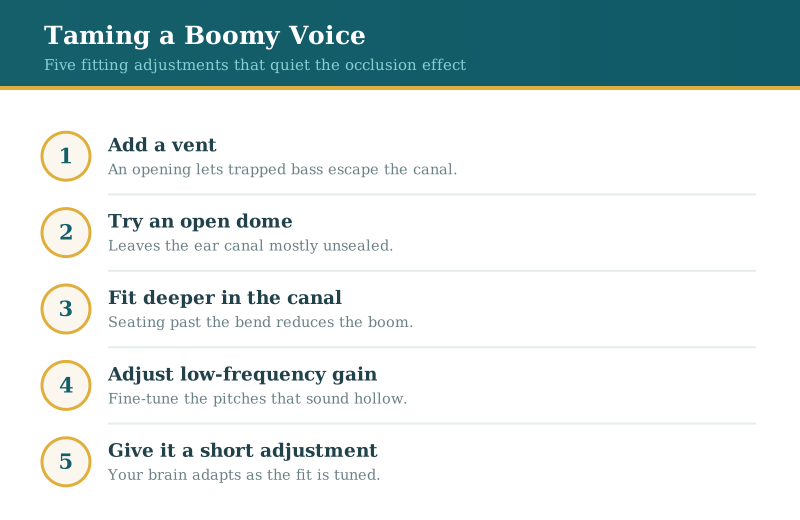
There is an intuition that a snug plug means better hearing, and for certain degrees of loss a closed fit truly is necessary. For many people, though, a fully sealed canal is exactly what creates the boom. Opening things up is the most direct fix. A vent, a small channel through the dome or earmold, gives those trapped low frequencies a way out. An open-style dome takes it further, leaving much of the canal unblocked. The right amount of opening depends on your hearing test results, which is one reason the evaluation and the fitting work hand in hand.
"This means I chose the wrong hearing aids"
A boomy first impression does not mean you picked badly. It usually means the style and the settings have room to be dialed in for your ears. Sometimes the fix is seating a custom device a little deeper, closer to the bony part of the canal where there is less soft tissue to vibrate. Sometimes it is switching from a closed dome to a vented one, or moving to a receiver-in-canal design that keeps the ear more open. These are refinements within your options, not a verdict on them. If you are still weighing styles, our team can walk through how each one behaves before you commit.
"Only cheap hearing aids do this"
Price and brand have little to do with it. The occlusion effect is physics, and it can show up with premium devices from any manufacturer when the canal is sealed and the fit has not been tuned for it. What separates a good outcome from a frustrating one is not the logo on the hearing aid but the care taken during fitting and the readiness to adjust afterward. A capable provider treats a boomy voice as ordinary feedback to act on, not a flaw you are stuck with.
Frequently asked questions
A few questions worth asking
Will the boomy sound go away on its own?
To a point, it does. Your brain adapts to the change over the first few weeks, so the effect often softens with wear. If it is still bothering you after that, treat it as a signal that the fit needs tuning rather than a reason to wait longer. A quick adjustment usually beats patience here.
Does a vent really make that much difference?
For most people, yes, and it is often the single most effective change. The vent gives the trapped low-frequency sound of your own voice a path to escape the canal, which is the heart of what makes speech boom. Your audiologist balances the vent size against your hearing needs so you keep the clarity you came for.
Are invisible or deep-canal styles more prone to this?
It depends on where the device sits. A fitting that reaches past the flexible part of the canal into the bony portion tends to reduce occlusion, while a shallow seal can worsen it. This is one of the trade-offs worth discussing when you choose a style, since the smallest devices are not automatically the kindest to your own voice.
What should I mention at my fitting appointment?
Describe the sound in plain terms, whether your voice seems hollow, echoey, or like you are talking in a barrel, and note when it is most noticeable. Details like that help pinpoint whether venting, a style change, or a software adjustment is the right move. You can start that conversation any time by reaching out to our offices in San Mateo and San Carlos.