


Choosing a Hearing Aid
Most of that starts with a clear picture of your hearing. A current hearing evaluation shows which sounds you are missing and how much help you need, which narrows the field faster than any spec sheet. Style and features are then choices you make on top of that baseline, not instead of it.
You do not have to sort this out alone. These are the same factors our audiologists weigh with patients, and most of them can be settled in a single conversation.
At a glance
- The best hearing aid depends on your hearing profile and daily listening needs, not on price or size alone.
- Style, battery type, and features each carry trade-offs worth understanding before you buy.
- A careful fitting and reliable follow-up support matter as much as the device brand.
Start with your hearing, not the catalog
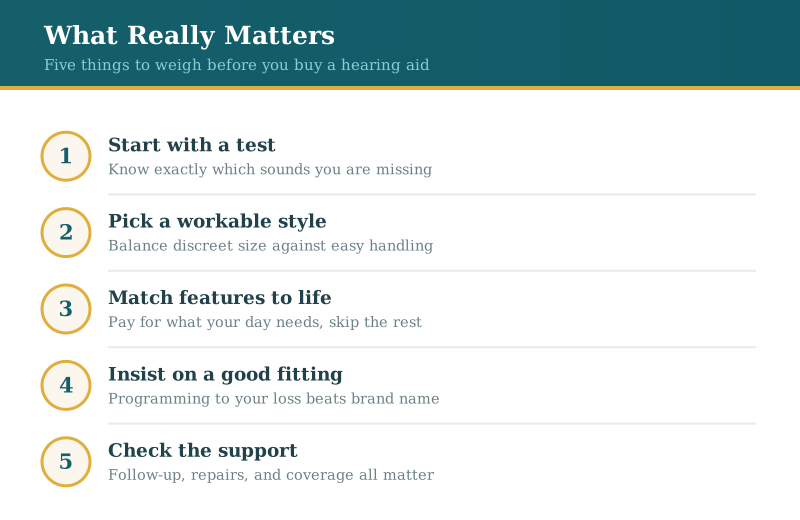
The smartest first step is knowing exactly what you are trying to fix. A hearing test maps which pitches and volumes you are missing, and that pattern points toward the level of technology you truly need. Someone who mainly struggles in quiet rooms has different needs from someone lost in a busy restaurant. Shopping by brand or price before you have that picture is guessing, and it tends to leave you paying for features you never use or missing ones you would.
Styles and the trade-offs behind them
Hearing aids come in a range of styles, from tiny in-the-ear models to behind-the-ear designs, and each balances size against power and handling. Smaller devices sit more discreetly but hold smaller batteries and can be fiddly for less nimble fingers. Larger ones are easier to manage, often fit stronger hearing loss, and leave more room for features. If dexterity or eyesight is a concern, that practical side deserves as much weight as appearance. You can compare hearing aids by brand once you know which style suits you, and there are models chosen with older hands in mind.
Features worth paying for
Today's hearing aids offer rechargeable batteries, Bluetooth streaming to phones and TVs, automatic adjustment for noisy places, and control from an app. Some of these will change your day and some you will never touch. If you take a lot of phone calls, direct streaming earns its keep. If you rarely leave quiet settings, the most advanced noise processing may be more than you need. The goal is matching features to how you spend your hours, not buying the longest list.
The fitting matters more than the brand
Two people can buy the same device and get completely different results, because a hearing aid only works well when it is programmed to your specific loss. A thorough hearing aid fitting sets the device to your test results, checks how it performs in your ears, and fine-tunes it over follow-up visits as your brain adjusts. A modest device fitted with care will usually outperform a premium one set up in a hurry. This is the part that separates a good outcome from a device that ends up in a drawer.
Support after the sale
A hearing aid is a years-long relationship, not a one-time purchase. Settings drift, ears change, and devices need cleaning and the occasional repair. Ask who handles adjustments, how follow-up visits work, and what happens when something breaks. It also pays to check your insurance and coverage early, since benefits vary widely from plan to plan. Knowing the support is there makes the whole investment easier to trust.
Frequently asked questions
Common questions about What to Consider When Choosing a Hearing Aid
How do I know which style of hearing aid is right for me?
It comes down to your hearing loss, your dexterity, and how much the look matters to you. Stronger losses and less nimble fingers often do better with a slightly larger behind-the-ear style, while milder losses open up smaller, more discreet options. An audiologist can match the style to both your test results and your daily habits.
Are more expensive hearing aids always better?
Price mostly reflects the number of advanced features, not the quality of the core sound. A mid-range device that is well fitted to your hearing will serve you better than a premium one that never gets tuned properly. Put your money toward the features you will genuinely use, and toward the person doing the fitting.
Can I get help choosing without committing to buy?
You can. A consultation is about understanding your hearing and your options, not signing anything. You are welcome to reach out to our San Mateo or San Carlos team to talk through what would suit you before you decide.