


Sound Sensitivity
That heightened response has a name, and it is more common than most people realize. Hyperacusis is a reduced tolerance to ordinary sound — the volume in the room may be perfectly normal, but your ears and brain treat it as an assault. It often shows up alongside tinnitus, the ringing or buzzing many people notice in quiet, and the two frequently share roots in how the hearing system processes signals.
The encouraging part is that hyperacusis usually responds to patient, well-chosen care, and you do not have to sort it out alone. A hearing evaluation at our San Mateo or San Carlos office gives us a clear picture of what your ears are doing, which is the honest starting point for any plan that holds up.
At a glance
- Hyperacusis is a reduced tolerance to everyday sounds, not simple irritation.
- It often occurs with tinnitus and can share the same underlying causes.
- Constant ear protection tends to backfire and deepen the sensitivity.
- Gradual sound therapy plus a professional evaluation is the reliable path to relief.
What hyperacusis feels like
People describe it in physical terms: a fork scraping a plate sends a jolt through the jaw, running water feels abrasive, applause is unbearable. The sounds themselves are ordinary, which is part of what makes the condition so isolating — others in the room feel nothing while you brace. Some people also feel a sense of fullness or pain in the ears after exposure. None of this means you are being dramatic; it means your auditory system has turned its gain up too high.
More than being annoyed by noise
Everyone dislikes certain sounds, so it helps to draw the line clearly. Ordinary annoyance is a preference; hyperacusis is a genuine drop in the volume your ears can comfortably handle, often with real discomfort or pain attached. It is also distinct from misophonia, where specific triggers like chewing spark a strong emotional reaction. With hyperacusis, it is loudness itself — across many kinds of sound — that becomes the problem.
Why some sounds start to hurt
Hyperacusis can follow noise exposure, a head injury, certain medications, ear infections, or conditions affecting the facial nerve, and sometimes it appears with no obvious trigger. The common thread researchers point to is a hearing system that has amplified its own sensitivity, often after the ear has been through some kind of stress. Because loud-noise exposure is one avoidable contributor, sensible hearing protection in genuinely loud settings matters, and the National Institute on Deafness and Other Communication Disorders offers plain guidance on shielding your ears from harmful noise.
The tinnitus connection
Hyperacusis and tinnitus keep close company. Many people who notice ringing also find that sound has grown harder to tolerate, and the reverse is common too. They appear to share wiring in how the brain manages auditory signals, which is why the two often improve with overlapping approaches. If ringing is part of your picture, our tinnitus care is built to address both the sound you hear and the sensitivity that rides alongside it.
Why hiding from sound backfires
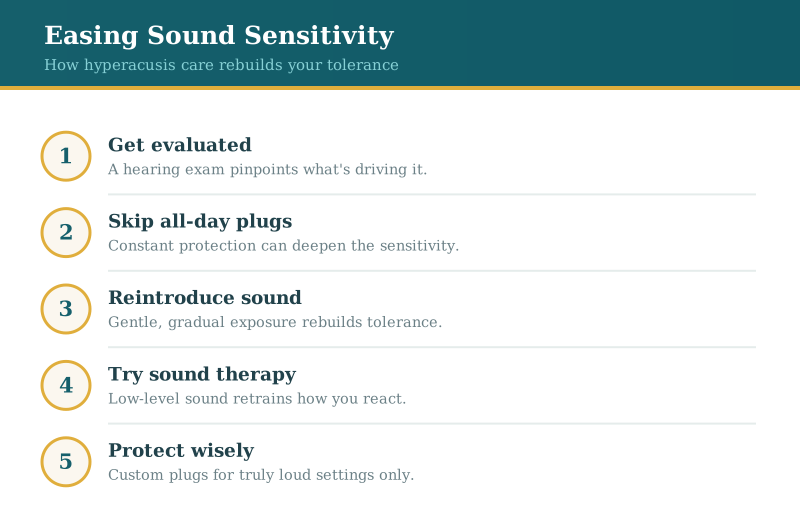
The instinct is to reach for earplugs and keep them in all day, and for a short while that brings relief. Over weeks, though, constant protection teaches the brain that even soft sound is threatening, and your tolerance shrinks further. Save strong protection for truly loud events — concerts, power tools, sporting arenas — and let your ears live in normal, everyday sound the rest of the time. This is one of the hardest instincts to unlearn, and one of the most important.
Turning the volume back down
Relief usually comes from steady retraining rather than a quick fix. After an evaluation, we may pair gentle, structured sound therapy — low-level, comfortable sound that gradually rebuilds your tolerance — with practical coaching on protection, pacing, and stress. Progress tends to be gradual and real. When you are ready to start, reach out to our team and we will map out a plan suited to how your ears respond.
Frequently asked questions
Questions patients ask us
Is hyperacusis permanent?
For many people it improves, sometimes substantially, with the right approach. Sound therapy and a gradual return to everyday sound can raise your tolerance over time. A few underlying causes need medical attention first, which is why an evaluation is the sensible starting point.
Should I wear earplugs all the time?
It is tempting, but no. Constant protection tends to make sensitivity worse by teaching your brain that normal sound is dangerous. Reserve strong protection for genuinely loud settings and use custom hearing protection when you truly need it.
Can hyperacusis and tinnitus be treated together?
Yes, and they often are. Because the two frequently share underlying mechanisms, our tinnitus therapy is designed to ease both the ringing and the heightened sensitivity to sound. Many people see the two improve in step.
When should I see a professional?
If everyday sounds cause pain or make you avoid normal activities, it is worth getting checked, especially if it came on suddenly or followed an injury. A hearing evaluation sorts out what is driving it and points you toward the right care.