


Family & Communication
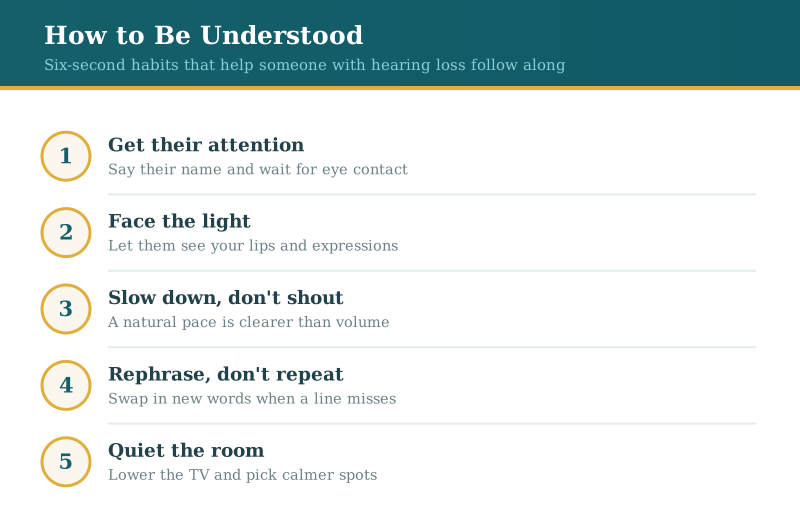
Much of this is within your control. Clear communication with someone who is hard of hearing depends more on how you speak and where you talk than on sheer volume. The habits below help right away, whether or not your loved one wears hearing aids yet.
None of these techniques replace an actual assessment. If the same struggles keep surfacing, our team can measure what is really happening and explain the options without any pressure. Think of good communication habits and a proper hearing check as two halves of the same effort.
At a glance
- Get the person's attention before you start speaking, and let them see your face.
- A natural, slightly slower pace helps more than raising your voice.
- Rephrase a missed sentence with new words instead of repeating the same ones.
- Reducing background noise does as much as anything to make conversation easier.
Signal before you speak
The most common misstep is starting to talk before the other person is ready to listen. Say their name, or offer a light touch on the arm, and wait for them to turn toward you. Those first few words are usually the ones that get lost, so a second of warning means the sentence starts where their attention already is. It feels slightly formal at first. After a week it becomes second nature.
Let them see your face
A great deal of understanding comes from watching a speaker's lips, teeth, and expression, even for people who never thought of themselves as lip-readers. Stand where the light falls on your face rather than behind you, keep your hands and your coffee cup away from your mouth, and skip calling out an important message from another room. If you are wearing a mask at a clinic or store, expect to repeat yourself and be patient about it.
Slower beats louder
Raising your voice is the instinct, and it usually backfires. Shouting distorts the shape of words and can turn sounds harsh for someone whose ears are already sensitive. A steady, slightly slower pace with small pauses between thoughts does far more good. You are not talking down to anyone by doing this; you are giving each word a moment to arrive.
Rephrase instead of repeating
When a sentence does not land, resist saying the exact same words again, only harder. Hearing loss tends to swallow specific sounds first — the high, soft consonants like s, f, and th — so a word that was unclear once is often unclear again. Swap in different words instead. A 'Do you want tea?' that keeps missing can become 'Would you like something hot to drink?' Rephrasing works where repeating does not, and it spares everyone a stalled loop.
Tame the background
Noise is the hidden villain of most difficult conversations. A television murmuring in the corner, a busy kitchen, or a crowded restaurant forces the brain to pull one voice out of a wall of sound, which tires out even typical hearing. Turn the TV off before an important talk, choose the quieter side of a cafe, and ask for a booth against a wall. Well-fit hearing aids handle noise far better than older models did, though no device erases a loud room completely.
Say the topic, then the details
People fill in a surprising amount of any conversation from context. If you switch subjects without warning — from the garden to a doctor's appointment to what's for dinner — a listener with hearing loss has to catch every word cold. Naming the topic first hands them a frame: 'About Saturday...' or 'Switching gears, the pharmacy called.' A one-second heads-up turns guesswork into easy following.
When the room keeps winning
Some settings stay hard no matter how careful everyone is: a large family dinner, a house of worship, a car full of road noise. If a loved one is still working this hard in everyday conversation, that is a signal worth acting on rather than adapting around forever. A hearing evaluation shows exactly where the gaps are, and a proper hearing aid fitting can be tuned for the noisy places that cause the most trouble. For older adults in particular, the right hearing technology for seniors makes group settings livable again. Our team in San Mateo and San Carlos can walk a family through what to expect.
A family guide
Our family guide has five simple habits for talking together, and a card you can print.
Frequently asked questions
Your questions, answered
Why does speaking louder sometimes make things worse?
Volume and clarity are not the same thing. When you shout, the shape of consonants distorts and the sound can turn harsh, which is uncomfortable for ears that are already sensitive. A calm, even pace at normal volume, with the person facing you, delivers far more usable speech than sheer loudness ever will.
Is it better to just text or write things down?
Writing has its place, especially for names, numbers, addresses, and appointment times, where a single missed sound changes everything. For everyday conversation, though, leaning on text can leave a person feeling sidelined. Keep it as a backup for the details that matter, not a replacement for talking together.
My mother wears hearing aids but still loses the thread at restaurants. Why?
Even excellent devices cannot separate one voice from a roomful of competing sound the way they separate speech from silence. Restaurants are among the hardest environments there is. A good hearing aid fitting can be adjusted with noisy settings in mind, and pairing that with a quieter table makes a real difference.
How do I raise the idea of a hearing test without starting an argument?
Frame it around connection rather than deficiency. Saying you miss easy conversation at dinner tends to land better than listing everything they mis-hear. You can offer to book the appointment and come along for support, which turns it into something you do together instead of something done to them.
Do these techniques still matter once someone has hearing aids?
Yes, and people are sometimes surprised by that. Hearing aids restore access to a lot of sound, but they do not rebuild a conversation held from another room over a running faucet. Facing the person, cutting the noise, and rephrasing when needed keep working alongside any device, and often help the device perform better.