


Medication & Hearing
Physicians turn to gentamicin when an infection is serious enough that a strong, fast-acting drug matters more than a gentler side-effect profile. Used carefully, with the right dosing and monitoring, it does important work. The tradeoff is that in some people it can reach the delicate structures of the ear and affect hearing or balance, so the goal is to catch any change early rather than to avoid the medicine.
That is where an audiology practice fits in. Our offices on the San Francisco Peninsula help patients and their physicians keep an eye on hearing during and after a course of an ototoxic drug, and we are glad to answer questions before treatment begins. You can always reach our team if you are unsure what to watch for.
At a glance
- Gentamicin is an aminoglycoside antibiotic that can, in some people, harm the inner ear and affect hearing or balance.
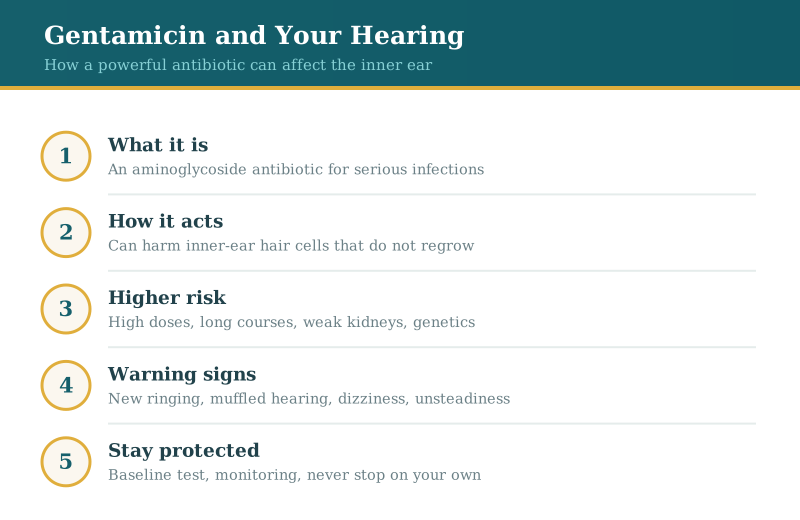
- The risk climbs with higher doses, longer courses, reduced kidney function, and certain inherited factors.
- Never stop a prescribed antibiotic on your own — report new ringing, dizziness, or hearing changes to your doctor promptly.
How gentamicin can reach the inner ear
Gentamicin can accumulate in the fluid of the cochlea and the balance organs, where it may injure the tiny hair cells that convert sound and motion into nerve signals. Because those cells do not regenerate, damage can be permanent. Hearing changes often begin in the high frequencies, which is why a person may not notice them at first, and the balance organs can be affected as well. Aminoglycoside antibiotics are among the medications known to be ototoxic, meaning harmful to the ear. This is not a reason to fear the drug, but it explains why careful dosing and monitoring matter so much.
Who faces higher risk
Not everyone who takes gentamicin is equally vulnerable. Risk tends to rise with larger doses, longer courses, and reduced kidney function, since the kidneys clear the drug and impaired kidneys let it build up. Dehydration, advanced age, and taking other ototoxic medications at the same time — certain diuretics or chemotherapy agents, for instance — can add to the load. There is also an inherited factor: a variation in mitochondrial DNA, passed down through the mother's side, that makes some people highly sensitive even at normal doses. If hearing loss from antibiotics runs in your family, tell your prescriber before treatment starts.
Signs worth reporting to your care team
During or after a course of gentamicin, pay attention to a few specific changes and report them without delay. New or louder ringing in the ears can be an early clue; if that symptom is unfamiliar, our overview of what tinnitus is explains it in plain terms. Muffled or fading hearing, a sense that voices are harder to follow, dizziness, unsteadiness on your feet, or a feeling that the ground moves when you walk all deserve a call to your physician. The point of reporting early is to give your doctor the chance to adjust the plan while there is still room to protect your hearing.
Protecting your hearing through treatment
The best protection is coordination between your medical team and an audiologist. Blood-level monitoring and kidney-function checks help your physician keep the dose in a safe range. A baseline hearing evaluation and, when a course runs long, follow-up testing let everyone spot a shift early. Staying well hydrated and sharing your full medication list and family history all help. If hearing does change, it is not the end of the story — modern hearing aids can restore a great deal of clarity, and a careful fitting tailors them to the exact pattern of your loss.
Frequently asked questions
What patients often want to know
Does everyone who takes gentamicin lose hearing?
Far from it. Most people complete a course without any lasting change to their hearing. The risk is real but affects a minority, and it is shaped by dose, treatment length, kidney health, and individual sensitivity. Careful monitoring is what keeps that small risk small.
Should I stop taking gentamicin if I notice ringing?
Please do not stop or change the dose on your own — that decision belongs with the doctor who prescribed it, because an untreated serious infection carries its own dangers. Call your prescriber promptly, describe exactly what you are noticing, and let them weigh the options. Stopping abruptly without guidance can do more harm than good.
Is hearing loss from gentamicin permanent?
It can be, since the inner-ear hair cells do not grow back once they are damaged. That is precisely why early detection matters: catching a change while treatment is still underway gives your physician the best chance to adjust course. Where loss does remain, it can be managed well with the right care.
Are gentamicin ear drops as risky as the IV form?
Generally the systemic (intravenous) form is where ototoxicity is most closely watched, because it reaches the whole body. Ear drops are a different situation and are usually prescribed with the eardrum in mind. Whichever form you are using, follow the directions exactly and raise any concern with the prescriber.
Can hearing be tested while I am still on the antibiotic?
Yes, and often that is the ideal time. Testing during treatment, compared against a baseline, is the clearest way to catch an early shift. Our team can coordinate with your physician so the results feed directly into your care.
What if I think an antibiotic already affected my hearing?
Start with an evaluation so you know exactly where your hearing stands today. From there we can talk through what the pattern suggests and what will help most, from communication strategies to devices. A hearing test is the right first step, and there is no wrong time to take it.