


Understanding Your Hearing Test
A hearing evaluation measures two different abilities, and this is the one people rarely hear explained. The audiogram shows the softest sounds you can detect; the word recognition score shows how much speech you understand once it is plenty loud. Volume and clarity are not the same thing, and your ears can do well on one while falling short on the other.
Knowing what this score means makes your own results far less mysterious, and it explains why 'I can hear you, I just can't understand you' is such a common and genuine complaint. If that sentence sounds familiar, our team can sit down and walk you through your numbers.
At a glance
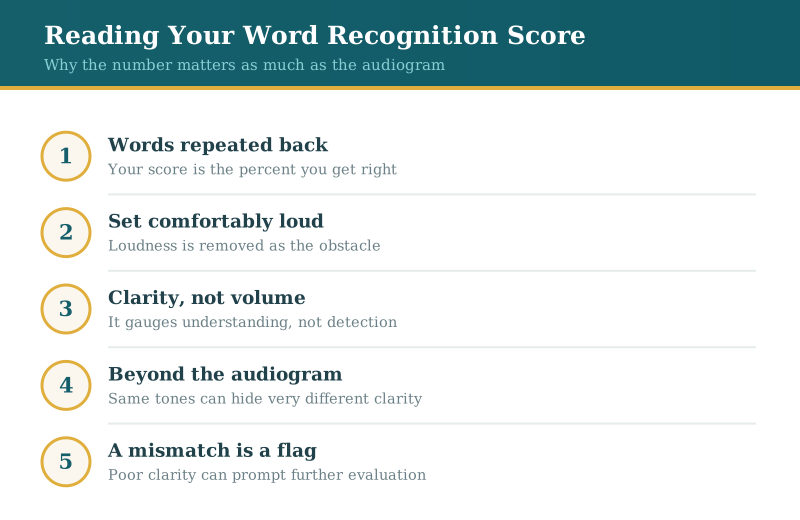
- Your word recognition score is the percentage of words you repeat back correctly when speech is set comfortably loud.
- The audiogram measures whether you can detect sound; word recognition measures whether you actually understand it.
- Two people with nearly identical audiograms can have very different clarity, and this score is what reveals it.
- A score much poorer than the audiogram predicts, or one that worsens as speech gets louder, may warrant further evaluation.
Two questions in one appointment
A standard hearing evaluation is really answering two separate questions, and people tend to hear about only the first. The audiogram tracks the softest tones you can detect across pitches, so it tells you whether a sound reaches you at all. The word recognition score asks something else: once speech is comfortably loud, how much of it do you understand correctly? One measure is about volume, the other about clarity, and both belong in a complete hearing test.
How the test is run
For this part, the audiologist plays a list of short, single-syllable words at a level set comfortably above your threshold, so loudness is not the obstacle. You repeat each word back, and the score is simply the percentage you get right. The word lists are deliberately plain and balanced for the sounds of English, which keeps the result about your hearing rather than your vocabulary. Because speech is what most people care about, this number often describes your real-world difficulty better than the tone chart on its own.
Same audiogram, different clarity
This is where the two measures pull apart. Two people can have nearly identical audiograms and still score very differently on word recognition. One repeats almost every word with ease; the other, hearing those same words at the same volume, mixes up 'thin' and 'fin' or loses the ends of words. That pattern reflects how well the hearing nerve and brain turn sound into meaning, not merely whether the sound arrived. It is also the source of a familiar frustration: knowing someone is talking without being able to tell what they said.
What the percentage is telling you
Read plainly, a higher percentage means clearer speech understanding under ideal, quiet conditions. A strong score suggests the raw signal is getting through well, which usually means a hearing device has good material to work with. A lower score means clarity is compromised even after volume is handled, so the challenge becomes less about turning speech up and more about how it is processed. Keep one limit in mind: the test happens in a quiet booth, so a good score does not promise effortless listening in a loud room.
When a low score deserves a closer look
In most cases the score lines up with the degree of loss shown on the audiogram. When word recognition comes in much poorer than the tones would predict, or drops as speech gets louder instead of holding steady, that mismatch is worth investigating. It can point to changes along the hearing nerve rather than the ear itself, and audiologists are trained to flag it. Those patterns are a reason to look further, sometimes with a medical referral.
How the score shapes your hearing aid plan
This number does real work in planning treatment. A high word recognition score tells your audiologist that amplification has clear speech to deliver, which supports honest, upbeat expectations for a hearing aid fitting. A lower score does not rule out help, but it does shift the goal: the plan leans toward improving clarity and taming background noise rather than adding volume alone. Either way, the score helps match you to the right hearing aids and set fair expectations before you commit.
From a number to everyday listening
In the end, the word recognition score turns a vague complaint into something measurable your care team can act on. It rounds out the audiogram, guides the plan, and now and then catches something that needs a doctor's attention. If restaurants, phone calls, or group conversations have grown tiring, that experience is worth putting to the test. You can review the results together with our team and, when the time feels right, schedule an evaluation at one of our offices.
Frequently asked questions
Questions patients ask us
Is a word recognition score the same as the audiogram?
They come from the same appointment but measure different things. The audiogram maps the softest tones you can detect, while word recognition checks how clearly you understand speech once it is loud enough. You need both to see the full picture of your hearing.
What counts as a good score?
Higher is better, and a strong result means speech is coming through clearly in quiet conditions. Rather than fixate on one cutoff, your audiologist reads the number alongside your audiogram and your day-to-day struggles. The combination tells you far more than any single figure.
Can my score change over time?
It can, since clarity may shift as your hearing changes, which is one reason periodic re-testing is useful. If speech starts getting harder to follow even at a comfortable volume, treat that as a prompt to have your hearing checked again.
Does a low score mean hearing aids won't help me?
Not necessarily. A lower score changes the goal more than it removes the option, so the plan leans on clarity and noise management instead of raw volume. Many people with reduced clarity still gain real benefit, especially with a careful fitting.
Why did I do fine in the booth but still struggle at dinner?
The test runs in quiet, one voice at a time, which is the friendliest setting possible. Real rooms pile on background noise, crosstalk, and distance, all of which tax understanding further. That gap is normal, and it is exactly what modern hearing aids are built to help with.