


Hearing Technology
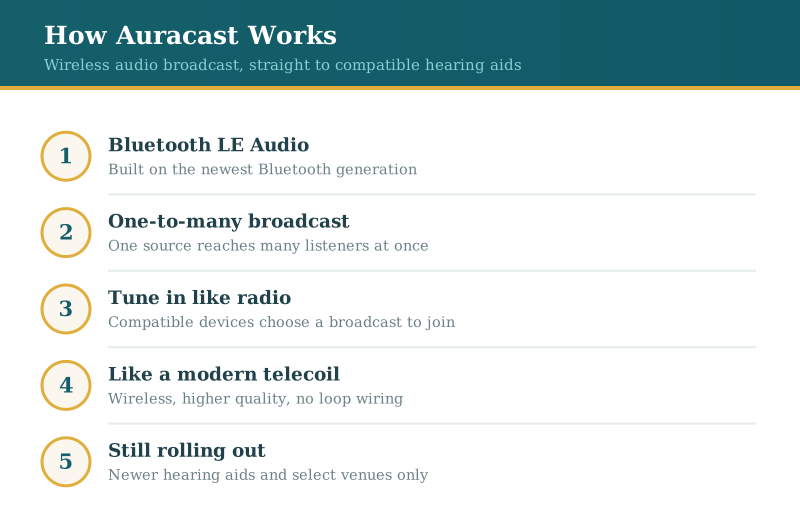
In technical terms, Auracast is part of Bluetooth LE Audio, the latest generation of Bluetooth. It lets one source — a TV, a public address system, a presenter's microphone — send sound out to any number of nearby devices at once, including hearing aids designed to receive it. It is less like pairing your phone to a single speaker and more like tuning a radio to a station that anyone in range can pick up.
The catch, and it is an honest one, is that Auracast is still early in its rollout. The standard exists and compatible products are arriving, but venues and devices are adopting it gradually. If you are curious whether your current or next hearing aids can use it, our team in San Mateo and San Carlos can walk you through it during a fitting or consultation.
At a glance
- Auracast is a broadcast feature of Bluetooth LE Audio that sends audio to many devices at once.
- It can deliver sound from TVs, PA systems, and microphones straight to compatible hearing aids.
- It works much like a modern telecoil or hearing loop, but wirelessly and at higher quality.
- Availability is still growing — not every hearing aid or venue supports it yet.
Auracast in plain terms
Auracast is a way to broadcast sound over the air to a crowd of listeners, with no cables and no one-to-one pairing. A single transmitter puts out an audio signal, and any compatible receiver in range can choose to listen. That receiver might be a pair of earbuds, a phone with headphones, or a set of hearing aids built on the newer Bluetooth standard. The point is shared, on-demand access to clear sound in places where speakers alone fall short.
The idea behind the technology
Auracast rides on Bluetooth LE Audio, a rebuilt version of Bluetooth designed to use less power and carry better sound. Older Bluetooth generally links two devices in a private pair. Auracast flips that model: the source broadcasts openly, and listeners opt in, much like choosing a Wi-Fi network from a list. A gym could broadcast the audio from each of its silent TVs, letting you select the screen you are watching. A lecture hall could send the speaker's voice to every listening device in the room.
Auracast next to telecoil and hearing loops
If you already use a telecoil, this will sound familiar. Hearing loops and telecoils have long let hearing aids pull sound straight from a venue's system, cutting through room noise. Auracast serves the same purpose but works over modern Bluetooth rather than a magnetic loop, which means better sound quality and no special loop wiring in the building. Telecoil is not going away, and many venues will keep it for years, so the two will coexist. For now, a telecoil remains the more widely available option, and it is still worth asking about when you choose a device during a hearing aid fitting.
Where you can expect to find it
The natural homes for Auracast are the places where public sound is hard to follow: airports, theaters, houses of worship, gyms, transit hubs, conference rooms, and museums. Some venues and manufacturers have started adding it, and phone makers are building in the controls to find and join broadcasts. Even so, this is a gradual buildout. You may not run into Auracast at your local venues for a while yet, and it is fair to treat broad availability as something coming rather than something already here.
Whether your hearing aids can tune in
To receive an Auracast broadcast, a hearing aid has to support Bluetooth LE Audio, which generally means a newer model. Many older hearing aids, even ones with Bluetooth streaming, use the previous standard and cannot join an Auracast broadcast. Some setups also rely on a phone or a small assistant device to browse and select broadcasts. If you are shopping, it is worth checking each brand's LE Audio support, and our team can help you compare what is available across major hearing aid brands.
What it means for you today
Auracast is a real step forward, and it is reasonable to be interested in it. It is not a reason to rush a purchase or to feel that your current hearing aids are behind. If your devices work well for you, they still work well. If you are due for new ones or weighing an upgrade, Auracast support is one feature to consider among many, alongside fit, sound quality, and battery life. A good starting point is a current hearing evaluation and a conversation about how and where you most want to hear better. From there, our team can tell you where Auracast fits into the picture, and where it does not yet.
Using Auracast for TV
Want TV sound in your hearing aids now? See our guide to hearing the TV clearly.
Frequently asked questions
Your questions, answered
Is Auracast the same as regular Bluetooth?
Not quite. Standard Bluetooth pairs two devices in a private connection, while Auracast broadcasts one audio stream that many listeners can join at once. It is built on Bluetooth LE Audio, a newer generation, so a device has to support that standard to use it.
Do I need new hearing aids to use Auracast?
For most people, a newer device is needed. Auracast requires Bluetooth LE Audio, and many current hearing aids — including some that already stream from a phone — use an older version of Bluetooth. If Auracast matters to you, ask about LE Audio support before you buy, and we can help you check.
Will Auracast replace telecoil and hearing loops?
Over the long run it may take over much of that role, since it offers better sound without special loop wiring. For now, telecoil is far more common in real venues, so the two will exist side by side for years. Keeping a telecoil-capable device is still a sensible choice.
Can I use Auracast at my local theater or airport right now?
That depends entirely on the venue. Adoption is still in its early days, so some places will have it and many will not. It is reasonable to think of Auracast as a feature that is spreading rather than one you can count on everywhere today.