


Hearing & Connection
Over time, those small adjustments add up to something bigger: pulling back from restaurants, family gatherings, and long conversations that used to feel effortless. Once following the talk takes real work, staying home starts to feel like the simpler choice. That slow withdrawal is where loneliness quietly takes root.
This pattern is common, rarely anyone's fault, and very treatable. A short hearing evaluation can show exactly what is going on, and modern hearing aids for seniors are more comfortable and discreet than most people expect. Our San Mateo and San Carlos offices see this story often, and it usually has a good ending.
At a glance
- Gradual hearing loss often goes unnoticed by the person who has it.
- Withdrawing from noisy places and phone calls is an early, telling sign.
- Social isolation and loneliness are real costs of untreated hearing loss.
- A simple hearing test is the first, low-pressure step back to connection.
The slow fade you stop noticing
Hearing rarely drops off a cliff. It slips a little each year, and each small step becomes the baseline you measure the next one against. You start reading lips without meaning to, catch the gist from context, and nod along in the spots you miss. Conversations still function, so nothing feels wrong until a quiet room and a soft voice expose the gap. A first hearing test result surprises many people for exactly that reason: the decline was slow enough to pass for ordinary aging.
The quiet slide into staying home
Straining to hear is tiring. After a loud restaurant or a big family dinner, many people feel worn out without knowing why. The natural response is to avoid the situations that drain them: fewer group outings, shorter visits, more time in the one quiet room of the house. Each choice makes sense on its own, but together they can shrink a social world without anyone deciding that was the goal.
What withdrawal costs a person
Connection is not a luxury in later life. It is part of staying well. When someone stops joining conversations, they miss more than the words. They miss the laughter, the inside jokes, the feeling of being in the middle of things. Loneliness can follow, and it is easy to mistake for aging itself. Often the real barrier is simpler and far more fixable: sound the ears are no longer catching clearly.
Signs families tend to notice first
The person with hearing loss is usually the last to see it. Family often notice sooner: the television volume, the repeated "what?", the way a parent goes quiet in a busy room or answers a question that was not quite asked. If you find yourself repeating things or watching a loved one drift to the edge of the gathering, that pattern is worth gently naming.
How to raise it with kindness
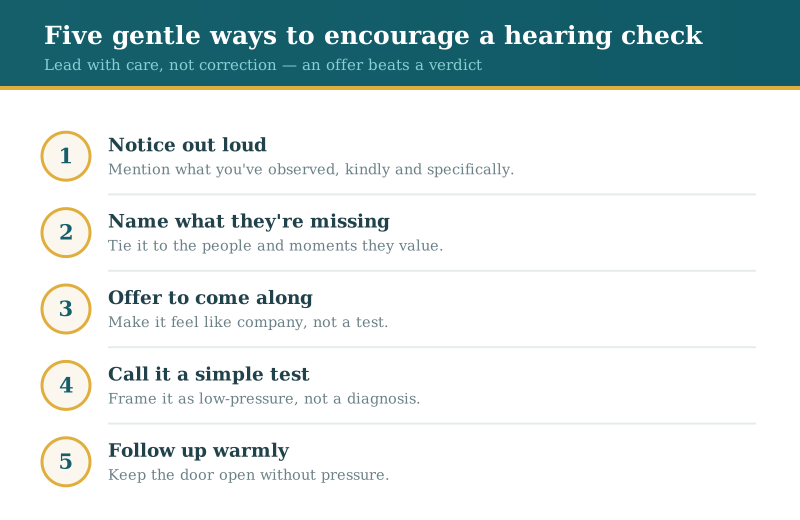
This conversation lands better as an invitation than as bad news. Skip "you can't hear anymore" and try "I've noticed restaurants seem harder lately, want me to come with you to get it checked?" Frame it around the things they are missing and want back: the grandkids' stories, the phone calls, easy dinners out. You can point to our team and offer to sit in on the appointment so it feels like company, not a test.
What treatment actually looks like
For most people, the path is straightforward and low-drama. It starts with a painless hearing evaluation, followed, if needed, by a hearing aid fitting matched to how and where they struggle most. Today's hearing aids come in many styles across major brands, several nearly invisible, and many connect straight to phones and televisions. The aim is not simply louder sound. It is easier conversation and less fatigue at the end of the day.
Reconnecting, one conversation at a time
Treating hearing loss will not erase every hard moment in a noisy room, but it often gives people back the confidence to say yes again — to the dinner, the reunion, the phone call. At follow-up visits the change people mention is rarely the sound itself. It is how much less tiring it is to be with people. If that sounds worth exploring, we would be glad to help you schedule a visit.
Frequently asked questions
A few questions worth asking
How can hearing loss cause someone to feel isolated?
When conversations take effort, people naturally start avoiding the settings where hearing is hardest, from restaurants to gatherings to phone calls. That slow withdrawal reduces daily connection and can lead to loneliness, even though the person may not link it to their hearing at all.
Why do older adults often not realize they have hearing loss?
The decline is slow enough that each stage feels like the new normal, and reading context and lip movement quietly covers the rest. A brief hearing evaluation is often the moment things finally click into place.
How do I bring up hearing loss with my parent without upsetting them?
Lead with care and specifics rather than labels. Mention what you have noticed, connect it to things they enjoy and are missing, and offer to go with them. Framing a hearing test as a simple, low-pressure step rather than a diagnosis tends to land far better.
Is hearing loss in seniors treatable?
In most cases, yes, and often quite effectively. After a hearing test, well-fit hearing aids can restore much of the clarity that makes conversation easier. Many people are surprised by how discreet and comfortable modern devices are and how much more they feel like joining in again.