


Medicare & Hearing Aids
Original Medicare, meaning Part A and Part B, was built around hospital and physician care, and hearing aids fall outside what it was designed to buy. Part B can help with a diagnostic hearing or balance exam when a doctor orders one to guide medical treatment, so the testing side sometimes has coverage even when the devices do not. Our page on insurance and coverage lays out that distinction in plain terms.
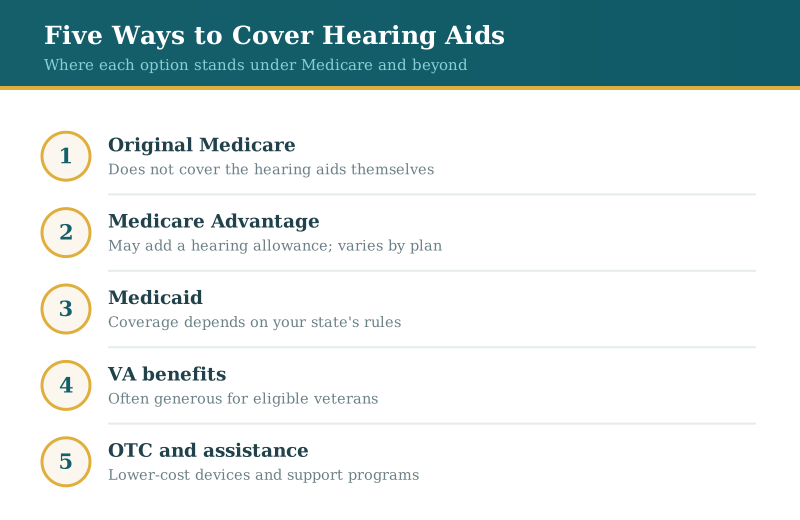
Medicare is not the only door. Depending on the plan you carry, the state you live in, and whether you served in the military, some or all of the cost of hearing aids may be offset. It pays to check each one rather than assume the answer is no.
At a glance
- Original Medicare (Part A and Part B) does not cover hearing aids themselves.
- Part B may cover a diagnostic hearing exam when a physician orders it for treatment.
- Medicare Advantage, Medicaid, and VA benefits vary and sometimes include hearing aids.
- Truly free devices are rare; more often coverage is partial, and we can help you check.
Where Original Medicare draws the line
Part A handles hospital stays and Part B handles outpatient medical care, and neither was written to cover hearing aids or the exams needed to fit them. What Part B can cover is a diagnostic hearing or balance test when your physician orders it to figure out a course of treatment, which is a narrower thing than a hearing aid evaluation. If you have Original Medicare alone, plan on the devices being an out-of-pocket cost, and factor that in early rather than at the counter.
Medicare Advantage plans and hearing benefits
Medicare Advantage, sometimes called Part C, is offered by private insurers that bundle your Part A and Part B coverage and often add extras. Many of these plans include a hearing benefit, which can mean a routine hearing exam, an allowance toward devices, or access to a specific network of providers. The catch is that benefits differ widely from plan to plan and year to year, so the only reliable move is to read your own plan's summary or call the number on your card and ask exactly what it pays toward hearing aids.
Medicaid and state-by-state coverage
Medicaid is a joint federal and state program, and hearing aid coverage under it depends heavily on where you live. Some states include hearing aids for adults, some limit coverage to children, and some cover little for adults at all. If you are enrolled in both Medicare and Medicaid, your Medicaid benefits may fill part of the gap Medicare leaves. Because the rules are set state by state and change over time, confirming your current benefit with your state's Medicaid office is worth the phone call.
Veterans and the VA
If you served, the picture can look quite different. The Department of Veterans Affairs provides hearing aids to eligible veterans, and for many that coverage is far more generous than anything on the Medicare side. Eligibility and specifics run through the VA rather than Medicare, so a veteran wondering about devices should start with their VA health benefits. It is one of the more direct paths to substantial help, and easy to overlook if you assume Medicare is the only option.
Lower-cost paths worth weighing
Coverage is not the only way to bring the price down. Over-the-counter hearing aids, a category the FDA established for adults with perceived mild to moderate loss, sell without a prescription and cost less than prescription devices, though they are not right for every kind of loss. Some manufacturers, nonprofit groups, and state vocational rehabilitation programs run assistance programs as well, and many clinics offer financing. A professional hearing test first tells you what your ears actually need, so you spend money on the right level of device rather than guessing.
Reading the word free carefully
When an ad promises free hearing aids through Medicare, it usually means one of a few things: a Medicare Advantage plan with a hearing allowance, a promotion tied to signing up for something, or a device far simpler than a fitted prescription aid. None of that is necessarily bad, but it helps to ask what is included, what happens after the trial period, and who adjusts the devices over time. A price of zero up front sometimes trades away the follow-up care and professional fitting that make hearing aids work well day to day.
Sorting your options without the runaround
Between plan documents, state rules, and marketing, it is easy to lose an afternoon and end up no clearer. That is a normal place to ask for help. When you come in, we can look at what your specific coverage says, explain where the real costs land, and point you toward the routes most likely to help, including guidance made for older adults on fixed incomes. You do not have to untangle the paperwork alone before you know whether treatment is even worth pursuing.
Frequently asked questions
Your questions, answered
Does Original Medicare ever pay for hearing aids?
For the hearing aids themselves, no. Part A and Part B do not cover the devices or the exams to fit them. Part B can cover a diagnostic hearing or balance test when a doctor orders it to guide treatment, so the testing and the devices are handled differently.
Can I really get hearing aids for free?
Occasionally, but read the fine print. Zero-cost offers usually come through a Medicare Advantage hearing allowance, a veterans benefit, or an assistance program, and they may cover only a basic device. Ask what is included and what follow-up care comes with it before you commit.
My friend's Medicare plan covered hearing aids. Why doesn't mine?
Your friend most likely has a Medicare Advantage plan with a hearing benefit, while you may have Original Medicare or a plan without that extra. Benefits vary by plan and by year, which is why comparing your own plan documents is the only sure way to know.
Are over-the-counter hearing aids a good substitute?
They can be a sensible, lower-cost choice for adults with mild to moderate loss, but they are not suited to every hearing profile. A hearing test tells you whether OTC devices will serve you or whether a fitted prescription option is the better fit for your ears.
How do I find out what my coverage actually includes?
Start with the summary of benefits your plan mailed you, or call the number on your insurance card and ask specifically about hearing exams and hearing aids. If that leaves you unsure, bring the details to us and we will read them with you and explain what they mean in practice.