


Ear Care
Where people run into trouble is with the tools. A cotton swab feels productive, but it tends to push wax deeper instead of lifting it out, and a packed canal can leave you with the very fullness and muffled hearing you were trying to fix. If your ears already feel plugged, a hearing evaluation can sort out whether wax is the culprit or something else is going on.
This guide walks the practical line between sensible home care and the point where it makes sense to have wax cleared by a professional. When that point arrives, earwax removal is a quick, gentle appointment rather than anything to dread.
At a glance
- Earwax is protective and self-cleaning; most ears never need routine cleaning inside the canal.
- Skip cotton swabs and ear candling — both can pack wax deeper or injure the ear.
- Sudden fullness, muffled hearing, or a whistling hearing aid are good reasons to have wax checked.
Why your ears make wax at all
Earwax, or cerumen, is not a sign that your ears are dirty. Glands in the outer canal produce it on purpose: it traps dust and debris, discourages bacteria, and keeps the thin skin of the canal from drying and itching. Take it out on a schedule and you get the opposite result: a canal that dries out and flakes, which then itches and invites more cleaning. In a healthy ear the wax slowly migrates outward on its own, carried toward the opening by jaw movement, where it flakes away when you wash. That built-in conveyor belt is why the ear is often described as self-cleaning, and why, for a lot of people, the best earwax routine is no routine at all.
Home care that helps, and habits that hurt
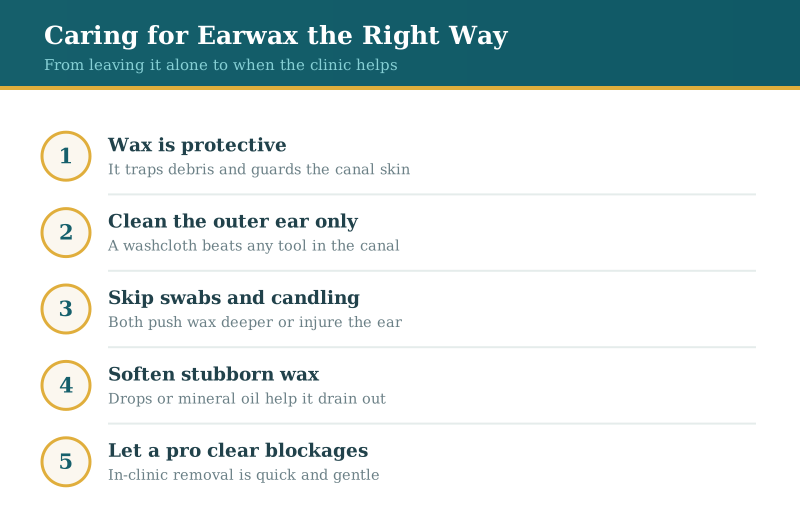
For everyday cleaning, a washcloth over your finger at the outer ear is genuinely enough. Problems begin when anything is inserted into the canal. Cotton swabs compress wax against the eardrum rather than removing it, and ear candling has been linked to burns and punctured eardrums while doing nothing to clear wax. If your ears tend to build up, a few drops of over-the-counter softening solution, or plain mineral oil, can loosen wax so it drains naturally over several days. That gentler approach is far safer than fishing for it.
Signs the wax has actually built up
A blockage rarely appears overnight. It tends to announce itself as a gradual sense of fullness or pressure, hearing that sounds muffled on one side, an itch deep in the canal, or a faint ringing that comes and goes. People who wear hearing aids often notice it first as feedback, that thin whistle, because wax narrows the canal and reflects sound back. Any of these is a reasonable prompt to have your ears looked at rather than to dig. If the change in hearing is sudden or one-sided and does not clear, treat it as a reason to book a hearing test promptly.
Having wax removed the safe way
When softening drops are not enough, professional earwax removal is the safe route. In the clinic we can see straight into the canal and lift wax out under direct view, using gentle irrigation or specialized instruments, so nothing gets pushed toward the eardrum. It usually takes only a few minutes and brings immediate relief. For hearing aid wearers it is doubly useful: clearing wax protects your hearing and keeps the devices working, and if a device has already been affected we can check it during the same visit or arrange hearing aid repair. Our team in San Mateo and San Carlos sees this every day, so if you are unsure whether to wait it out or come in, just get in touch and ask.
Frequently asked questions
A few questions worth asking
Are cotton swabs really that harmful?
The worry is well founded. Swabs may pull out a little wax near the opening, but they push the rest deeper, and a canal packed against the eardrum can hurt, itch, or muffle sound. Keep them to the outer ear only. If wax is bothering you further in, softening drops or a quick clinic visit will do the job without the risk.
Do over-the-counter ear drops work?
For many people, yes. Drops that soften or break down wax can help it drain on its own over a few days, and plain mineral oil works similarly. They tend to help most with mild buildup. If drops do not clear the fullness, or your ears feel worse, that is a sign to stop and have them looked at rather than adding more.
Is ear candling safe?
We would steer you away from it. Ear candling has not been shown to remove wax, and it carries a real risk of burns, dripped wax, and eardrum injury. The relief some people report is not backed up when the ear is examined afterward. Softening drops or professional removal accomplish the goal without the hazard.
Can earwax cause hearing loss or ringing?
It can, and that kind of loss is temporary. A canal blocked by wax dampens incoming sound and can trigger a mild, on-and-off ringing. Both usually resolve the moment the blockage is cleared. Because the symptoms overlap with other causes, though, it is worth having the ear checked rather than assuming.
How does earwax affect hearing aids?
Wax and hearing aids interact more than people expect. Devices sit in the canal and can nudge wax inward, while wax in turn clogs receivers and causes whistling or dropouts. Daily wiping and regular filter changes prevent most trouble, and routine hearing aid care keeps both your ears and your devices clear.
How often should I have my ears professionally cleaned?
There is no fixed schedule that suits everyone. Plenty of people never need it, while those who make a lot of wax, wear hearing aids, or have narrow canals may come in a couple of times a year. A practical rule is to have it done when you notice symptoms rather than on a calendar. Our team can tell you at a checkup whether you are someone who benefits from regular visits.