


Living With Hearing Aids
The parts that wear out are cheap and predictable: wax guards, domes, tubing, and eventually the receiver. Each has a rough interval and a specific symptom that tells you it is due. This page gives both, because the interval alone is not much use — how fast your parts clog depends on how much wax you produce, and that varies enormously between people.
If something has already gone quiet, start with our troubleshooting guide, which runs through the checks in order. If you would rather we simply did it, bring them to either office — that is what the repair and service bench is for.
At a glance
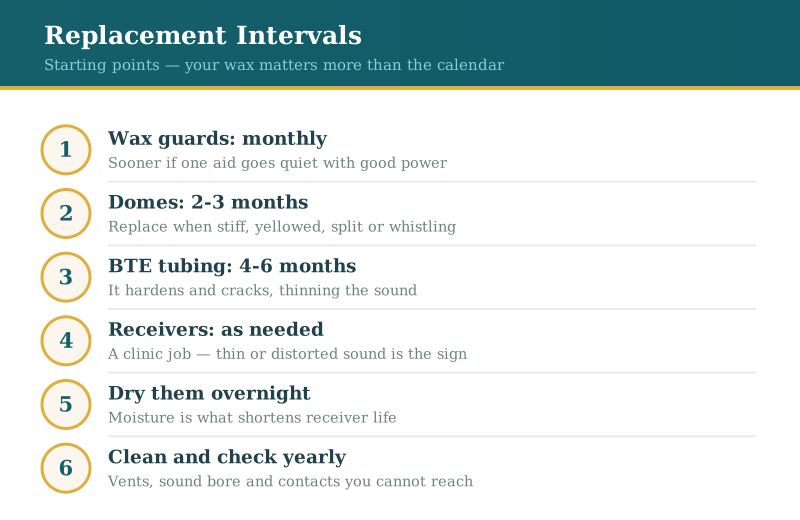
- Wax guards need changing about monthly, but heavy wax producers may need them weekly.
- Domes go every two to three months; tubing on a behind-the-ear aid every four to six.
- A hearing aid that has gone silent is far more often blocked than broken — check the wax guard first.
- Receivers are a clinic job rather than a home one, and they usually fail gradually rather than all at once.
Wax guards: about monthly, sooner if you produce a lot
The wax guard is the small white filter sitting in the end of the receiver, and it is the single most common reason a hearing aid stops working. Roughly monthly is the usual guidance, though the honest answer is that it depends entirely on your ears — some people genuinely need a fresh one every week, others manage a couple of months. The symptom is unmistakable once you know it: sound drops away or disappears on one side while the other is fine, and a new battery or a full charge changes nothing. Guidance from clinics is consistent on the test — if the aid seems dead and the power is fine, look at the filter before you look at anything else.
How to change a wax guard yourself
Each manufacturer supplies a small tool that does both jobs in one movement. It has two ends: a pin holding a fresh guard, and an empty pin for removing the old one. Push the empty end straight into the used guard, pull it out, then push the fresh guard in with the other end and withdraw the tool. Straight in, straight out, no twisting. The two mistakes worth avoiding are pushing at an angle, which can damage the receiver, and reusing a tool that already has a spent guard on it. Ask us to run through it once at an appointment; almost everyone gets it after a single demonstration.
Domes: every two to three months
The dome is the soft tip that sits in your ear canal. It hardens, discolours and loses its shape over time, and a stiff dome seals less well, which costs you low-frequency sound and can start a whistle. The general interval is every two to three months, with some clinicians preferring monthly. The signs are easier to judge than the calendar: a dome that has gone yellow or crusty, one that feels stiff rather than springy, one with a split, or a device that has started whistling or feeling loose when it did not before.
A dome came off in my ear
It happens, and it is not an emergency, but do not go looking for it. Fingers, tweezers and cotton buds all push a dome deeper and risk the canal and eardrum. Take the hearing aid out, check whether the dome is still on the receiver, and if it is not, assume it is in the canal and call us on 650-342-9449. Removing it takes a few minutes with proper light and instruments. This is also the argument for changing domes before they perish: a dome that comes off in the ear is nearly always one that was overdue.
Tubing on behind-the-ear aids: every four to six months
If you wear a behind-the-ear aid with a clear plastic tube to an earmold, that tubing is a wear part in its own right. It yellows, hardens and eventually cracks, and as it stiffens the sound gets thinner and feedback becomes more likely. Four to six months is the usual replacement interval. Retubing is quick and inexpensive, and it is worth doing on schedule rather than waiting for the crack, because a split tube can leak sound and set off whistling that is easy to mistake for a fitting problem.
Receivers: when the part that makes the sound gives up
The receiver is the miniature speaker sitting in your ear canal, and it lives in the most hostile environment in the device — warm, humid and full of wax. Receivers usually fail gradually: sound becomes thin, distorted or intermittent, and changing the wax guard and dome does not restore it. Sometimes it fails outright after moisture gets in. This is not a home repair. We replace receivers at the clinic, matched to your prescription and power level, and there is a charge for the part which we will quote before doing the work. If your devices are still under manufacturer warranty, a receiver replacement is often covered — worth checking before you pay.
Dry-aid kits and dehumidifiers
Moisture is the quiet killer. Sweat, humidity and condensation corrode contacts and shorten receiver life, and the damage is cumulative rather than dramatic. A drying container — either a simple tub with a desiccant puck or an electric dryer that runs overnight — gives the devices somewhere to shed that moisture while you sleep. Anyone who exercises, works outdoors, or lives through a humid summer benefits, and so does anyone whose aids have already failed once from moisture. We keep them at both offices. If you already leave your aids in a charger overnight, a dryer is not a substitute for charging, but there are combined units that do both.
Professional cleaning: once or twice a year
Home care handles the surface. A clinic clean handles what you cannot reach: wax in the vents and sound bore, debris under the receiver, contacts that have corroded, tubing and filters replaced properly, and a listening check to confirm the devices are actually performing to their prescription. Once or twice a year suits most wearers, and more often if you produce a lot of wax. We fold this into routine follow-up visits for our own patients. There is a fee for a clean-and-check on devices we did not dispense, quoted before we start. Call 650-342-9449 — San Mateo at 88 N. San Mateo Drive, San Carlos at 1008 Laurel Street.
Frequently asked questions
Your questions, answered
How often should I change the wax guard?
About once a month as a starting point, but it is genuinely individual — heavy wax producers may need a fresh one weekly. The reliable signal is not the calendar: if one hearing aid goes quiet or dead while the other is fine, and the battery or charge is good, change the wax guard before assuming anything is broken.
How do I change a wax guard myself?
Use the tool your manufacturer supplies. One end holds a new guard, the other is empty for removal. Push the empty end straight into the old guard and pull it out, then insert the new one with the other end and withdraw the tool. Keep it straight rather than twisting. We are happy to demonstrate once at an appointment — most people need showing only a single time.
How often should I replace the domes?
Every two to three months is typical, and some clinicians suggest monthly. Replace sooner if a dome has gone yellow or stiff, has split, feels loose in the ear, or if the device has started whistling when it did not before. Domes are cheap, and a perished one costs you sound quality.
How do I know a dome needs replacing?
Look at it and feel it. A fresh dome is soft and springy and holds its shape; an old one is discoloured, stiff, sometimes crusted with wax, and may be misshapen where it has been compressed. Whistling, a loose feeling in the ear, or a sudden drop in bass are the functional clues.
A dome came off inside my ear — what should I do?
Do not try to retrieve it with fingers, tweezers or a cotton bud, all of which push it deeper. Take the hearing aid out, check whether the dome is still attached, and if not, call us at 650-342-9449. Removal takes a few minutes with proper illumination and instruments, and is far easier than the alternative after someone has pushed it further in.
How often does BTE tubing need replacing?
Every four to six months for a standard behind-the-ear aid with an earmold. The tubing hardens and yellows with age, which thins the sound and makes feedback more likely, and eventually it cracks. Retubing is quick and inexpensive, and is better done on schedule than after the split.
When does the receiver need replacing, and can you do it here?
When sound is thin, distorted or cutting in and out and a new wax guard and dome have not fixed it. We replace receivers at the clinic, matched to your prescription and power level, with the cost of the part quoted before the work. If the devices are still within the manufacturer warranty, this is often covered — worth checking first.
Do I need a hearing aid dryer?
It is a genuinely useful accessory rather than an upsell, particularly if you exercise, work outdoors, live somewhere humid, or have already lost a device to moisture once. Drying overnight slows the corrosion that shortens receiver life. We stock them at both offices, and there are combined units that dry and charge together.
How often should my hearing aids be professionally cleaned?
Once or twice a year suits most people, more often if you produce a lot of wax. A clinic clean reaches the vents, sound bore and contacts that home care cannot, replaces filters and tubing properly, and includes a listening check against your prescription. For our own patients this is part of routine follow-up.