


Tinnitus & Brain Health
This matters because the loudness a machine might measure and the distress you actually feel do not always line up. Two people with nearly identical results on a hearing evaluation can describe their tinnitus worlds apart, one barely bothered and the other losing sleep. If the ear were the whole story, that gap would be hard to explain.
None of this makes tinnitus imaginary or something to push through on your own. It points instead toward care that works with how the brain handles sound. Our audiologists in San Mateo and San Carlos see this every week, and the reframe tends to bring relief rather than worry.
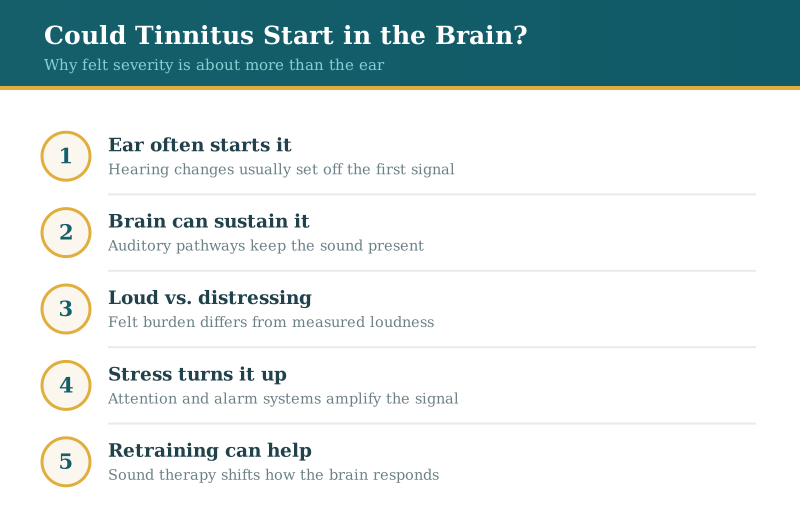
The ear may start it, and the brain often keeps it going
In most cases the trigger sits in the ear or the hearing nerve. Damage to the tiny hair cells, often from noise or age, changes the signal traveling upward. What researchers have come to appreciate is that the sound you hear is generated higher up, in the brain's auditory pathways, as they react to that altered input. This is part of why tinnitus can persist even after the original ear problem is stable, and why understanding what tinnitus is means looking beyond the ear alone.
Measured loudness and felt distress are different things
Matched against an external tone, most people's tinnitus turns out to be surprisingly soft. Yet the burden it creates ranges from a minor annoyance to something that disrupts sleep and concentration. That gap tells researchers a great deal: raw volume is only one part of the picture. How strongly the brain flags the sound as important, threatening, or worth monitoring appears to shape the distress more than loudness does.
When the brain turns up its own volume
One leading idea is that when the ear delivers less input, the brain compensates by boosting its own sensitivity, a bit like raising the gain on a microphone. Push the gain up and ordinary background neural activity can become audible as ringing or hissing. It is an appealing explanation for why hearing loss and tinnitus travel together so often. It also hints at why restoring input can help: well-fit hearing aids feed the brain more real sound, which for many people makes the internal signal easier to set aside.
Attention, stress, and the feedback loop
Notice a sound, read it as a threat, and the brain's alarm and attention systems lock on, which makes the sound feel louder and harder to tune out, which fuels more worry. That loop helps explain why tinnitus tends to spike during stress or in a silent room, and why a rough night makes it worse the next day. It also points toward a way out, since interrupting the loop matters more than chasing the sound itself.
Why this reframes treatment
If tinnitus is sustained by how the brain processes and reacts to sound, then care can work on those reactions instead of demanding silence from the ear. Sound therapy uses gentle, controlled sound to soften the contrast between the tinnitus and its surroundings, so the brain gradually files it as unimportant background. Structured tinnitus therapy adds guidance for the attention and stress side. Neither erases the signal on command, but together they can shrink how much space it takes up in your day.
When ringing deserves a prompt look
Most tinnitus is not dangerous, but a few patterns call for timely attention: ringing that comes on suddenly, sits in only one ear, pulses in time with your heartbeat, or arrives alongside dizziness or a sudden change in hearing. The National Institute on Deafness and Other Communication Disorders advises having these evaluated rather than waiting them out. Booking a hearing test is a sensible first step, and our team can explain what your results point to.
Frequently asked questions
Questions patients ask us
If the ringing comes from my brain, is it imaginary?
Not at all. The sound reflects real neural activity, not something you are inventing, and it deserves to be taken seriously. What the brain-based view adds is a bit of hope: because the brain can adjust how it processes sound, there are practical ways to loosen the sound's grip even when the ear cannot be fully repaired.
Why does my tinnitus get louder in a quiet room or when I am stressed?
Silence strips away the everyday sounds that normally cover it, so the signal stands out more. Stress and fatigue turn up the brain's attention and alarm systems, which amplify whatever they focus on. Many people find that adding soft background sound and easing stress takes the edge off.
Can anything actually quiet tinnitus?
There is no switch that turns it off, but several approaches lower how loud and intrusive it feels. Sound therapy, hearing aids when hearing loss is present, and structured counseling all work on the brain's response rather than the ear. Over time, a good number of people notice the sound slipping into the background.
When should I have my tinnitus checked?
Make an appointment if it starts suddenly, stays in one ear, pulses with your heartbeat, or comes with dizziness or a drop in hearing. Even steady, long-standing tinnitus is worth a visit, since our team can rule out treatable causes and build a plan that fits how much it is affecting you.