


Choosing a Provider
Many Miracle-Ear stores are staffed by licensed hearing instrument specialists, while some also employ audiologists. Staffing varies because a large share of locations are independently owned franchises, so the person you meet in one town may hold different credentials than the person in the next. Neither arrangement is inherently good or bad; what matters is knowing who you'll see and whether their training matches what your ears need. A good starting point is a thorough hearing evaluation, whoever provides it.
At California Hearing Center, our San Mateo and San Carlos offices are led by audiologists. Still, the useful thing to know is how to judge any provider's credentials for yourself, so your choice fits your hearing rather than a brand name.
At a glance
- Miracle-Ear is a retail hearing aid chain, and staffing varies by location because many stores are independently franchised.
- Some locations employ audiologists (AuD), while many are staffed by licensed hearing instrument specialists.
- Both credentials are licensed and can dispense hearing aids, but their training and scope differ.
- Ask directly who you'll see, and confirm the license with your state board before you book.
Start by asking who will see you
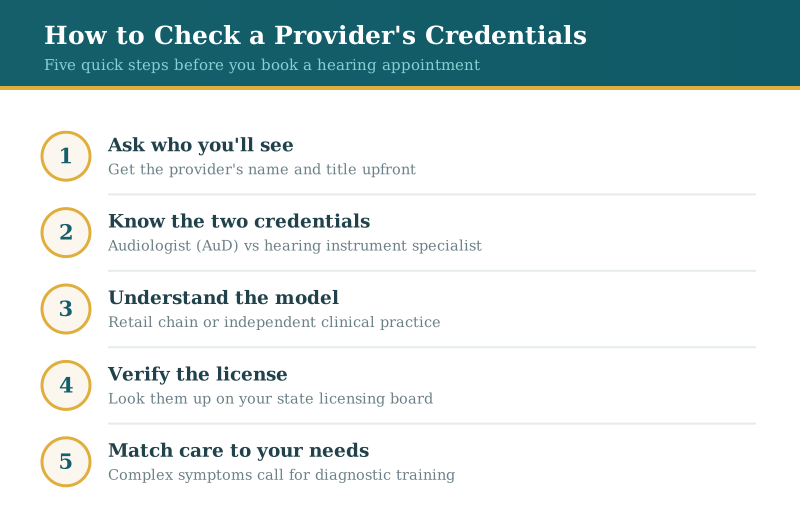
The single most useful question you can ask when you call is simple: who will I be seeing, and what are their credentials? A receptionist can tell you whether your appointment is with an audiologist or a hearing instrument specialist. If the answer is vague, ask for the provider's name and title in writing. Reputable offices, retail or independent, answer this without hesitation, so a runaround is itself worth noting.
The two credentials you'll run into
An audiologist holds a graduate degree in audiology — most today earn a clinical doctorate, the AuD — and is trained to diagnose hearing and balance conditions, not only to fit devices. A hearing instrument specialist is licensed to test hearing for the purpose of selecting and fitting hearing aids. Both must be licensed by the state, and both can dispense hearing aids. If you want the full picture, ASHA walks through what an audiology doctorate involves.
How retail chains and independent practices differ
Retail chains such as Miracle-Ear are built around selling and servicing hearing aids at scale, often with a set menu of brands and financing plans. Independent audiology practices tend to carry devices from several manufacturers and to fold fittings into broader diagnostic care. One model isn't automatically better than the other. A well-run retail store can serve a straightforward hearing loss perfectly well, while more complex needs often call for the wider scope of a clinical practice. Knowing which you're walking into helps you set the right expectations for hearing aids and follow-up care.
Verify the license yourself
You do not have to take anyone's word for a credential. Every U.S. state licenses both audiologists and hearing instrument specialists, and most licensing boards let you look up a provider's name online to confirm the license is current and in good standing. It takes a couple of minutes and works the same whether the office is a national franchise or a local clinic. If you can't find a listing, that is a fair reason to ask a few more questions before you commit.
Match the provider to what your ears need
Think about why you're going in. For a routine hearing aid upgrade, a specialist may be all you need. But ringing in the ears, sudden or one-sided hearing loss, dizziness, or drainage are signals that call for a clinician who can evaluate the medical side, not just the device. That is where an audiologist's diagnostic training earns its keep, and where a careful hearing aid fitting is only one part of the visit. We also see people whose main concern is tinnitus, which tends to benefit from that broader evaluation.
Where California Hearing Center fits
Our practice sits on the clinical end of that spectrum. Appointments are led by audiologists, we're a HearingUp-approved provider, and we work across major hearing aid brands rather than a single line. If you're weighing us against a retail option, we'd rather you ask us the same credential questions you would ask anyone — you can read about our team before you call. The right choice is the one that fits your hearing, your budget, and how much diagnostic care you actually want.
Frequently asked questions
A few questions worth asking
Does Miracle-Ear have audiologists?
Some locations do, and many are staffed by licensed hearing instrument specialists instead. Because a large share of stores are independently franchised, the credentials you'll find vary from one location to the next. The reliable way to know is to call the specific office and ask who will see you and what license they hold.
Is a hearing instrument specialist as good as an audiologist?
They aren't interchangeable, though both are licensed and both fit hearing aids. A specialist focuses on testing for and dispensing devices, while an audiologist has broader diagnostic training for hearing and balance conditions. For a routine fitting, a specialist may be plenty; for anything unusual, an audiologist's wider scope is worth seeking out.
How do I check a provider's credentials before booking?
Ask for the provider's name and title when you schedule, then look them up on your state licensing board's website to confirm the license is active. You can also ask whether the visit includes a full hearing evaluation or only a fitting. A trustworthy office, chain or independent, will welcome the questions rather than dodge them.